







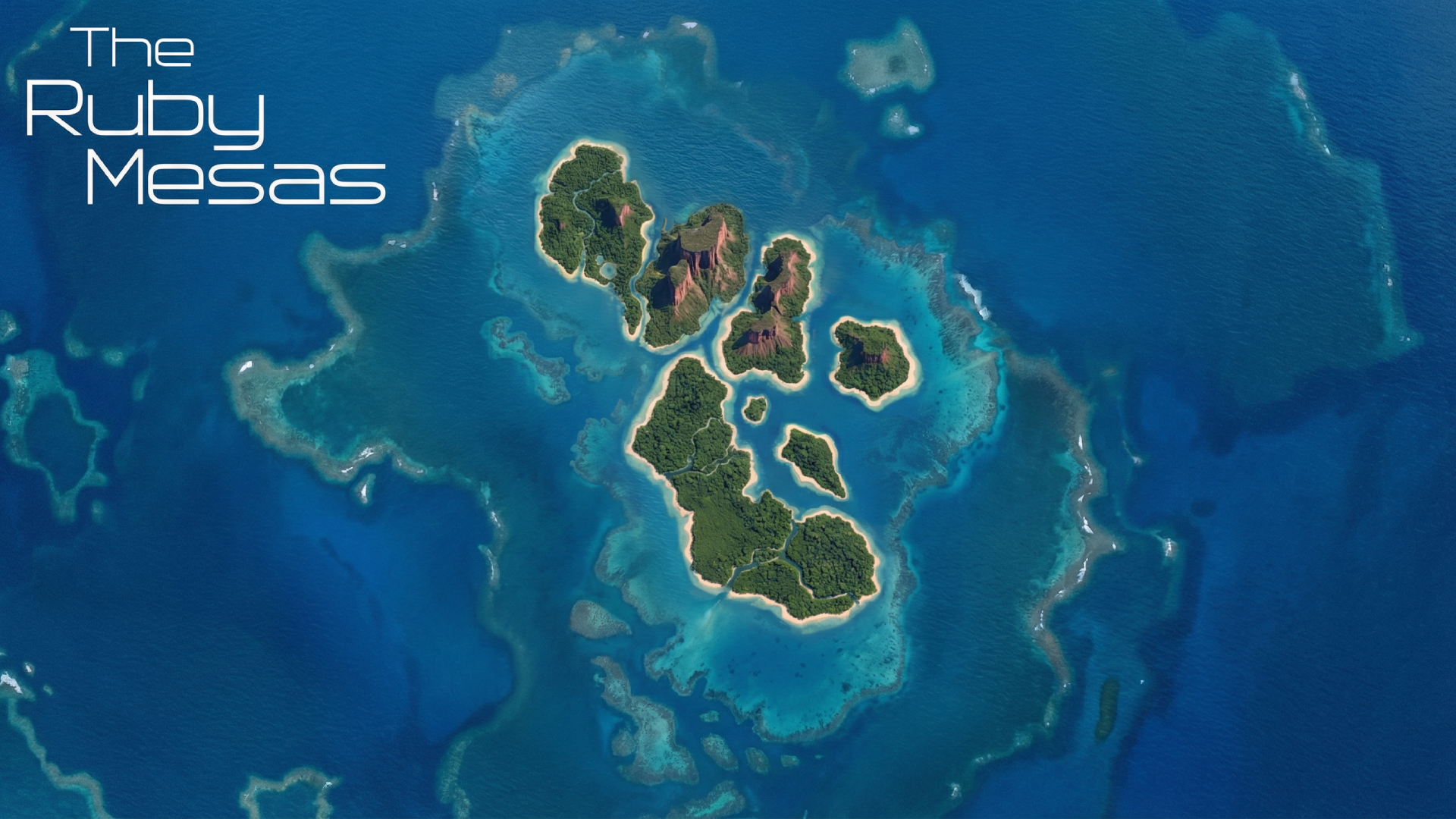
The Ruby Mesas represent the most dramatic elevation shift in the New Cyana archipelago, rising sharply from coastal lowlands to high plateau flats in a manner reminiscent of ancient Cyana and the elder subcontinental fragment from which the islands are all that remain.
The southern reaches consist of beaches, marshlands, and open grasslands that give way to a modest central steppeland. From there, the terrain climbs abruptly to three large mesa formations—broad, flat-topped expanses of red rock and sparse vegetation that dominate the skyline.
This cluster is the territory of the Zyolma (jaguar-associated tribes), who maintain a highly secluded yet self-sufficient presence. While economic arrangements with HTH Studios exist, they are limited and respectful; the Zyolma retain primary authority over their domain and have extended measured welcome to select visitors.
Regionally and culturally, the Ruby Mesas stand apart. The landscape is not strictly jungle—open sky, wind-scoured stone, and vast horizontal vistas create an exotic, almost otherworldly contrast to the lush clusters elsewhere. This is the outdoors of the outdoors: kayaking through coastal channels, multi-day trail hikes across the steppe lands and up mesa flanks, rock climbing on sheer red walls. Activities here demand preparation and endurance rather than casual access.
Cultural preservation is strongest in this region. Several temples are carved directly into the mesa rock faces, accessible only by guided paths. The Jaguar Village, a living Zyolma settlement, is open to vetted visitors under strict protocols that honor tribal customs and privacy.
The Ruby Mesas offer raw, unfiltered immersion: elevation, isolation, and cultural depth that reward those seeking authenticity over convenience. Development remains minimal by design; the mesas preserve their stark beauty and tribal sovereignty.