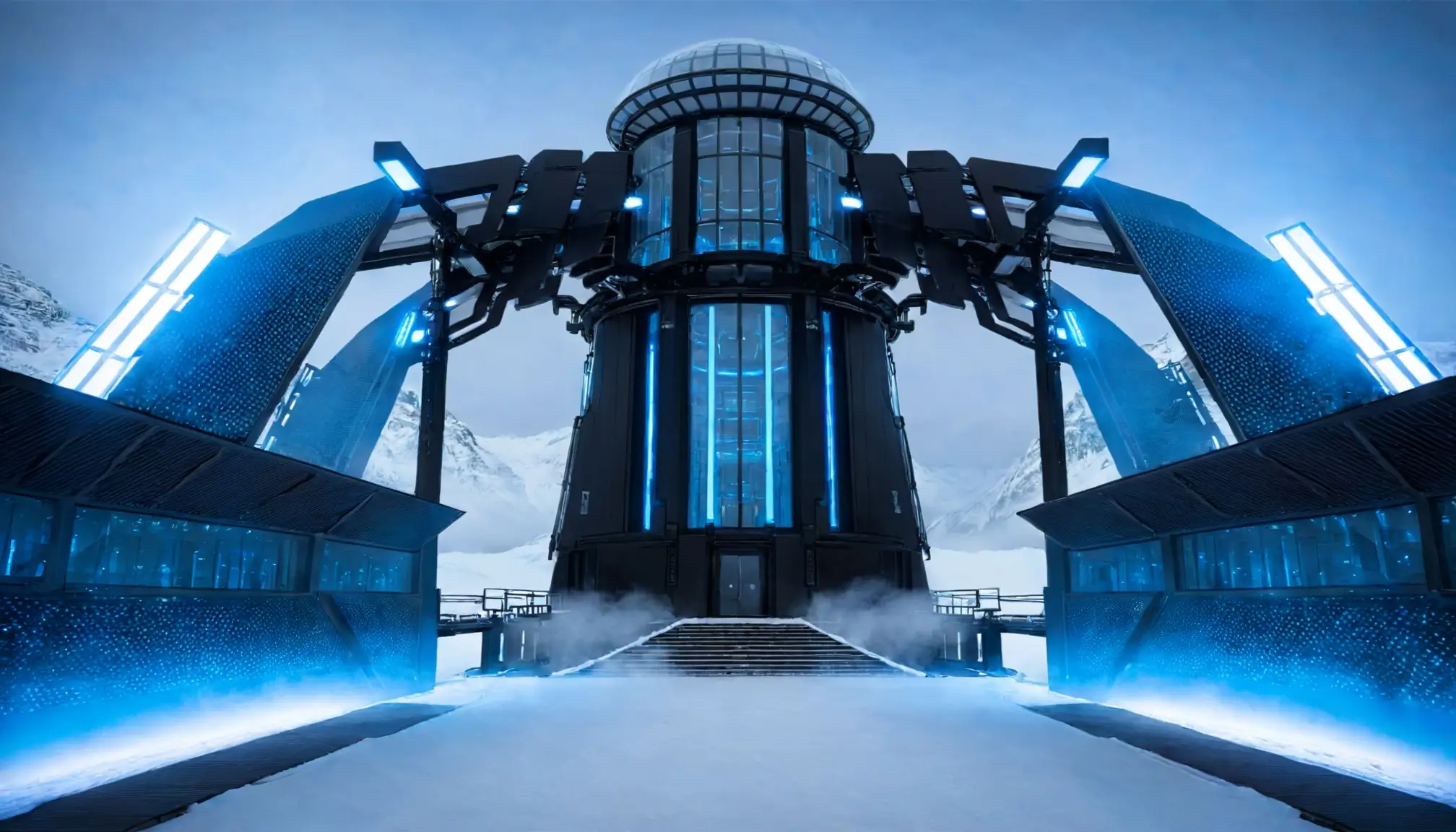

![The Ranar System [4,500 PCS]](https://hthstudios.com/website/wp-content/uploads/2026/01/Vaultus.webp)
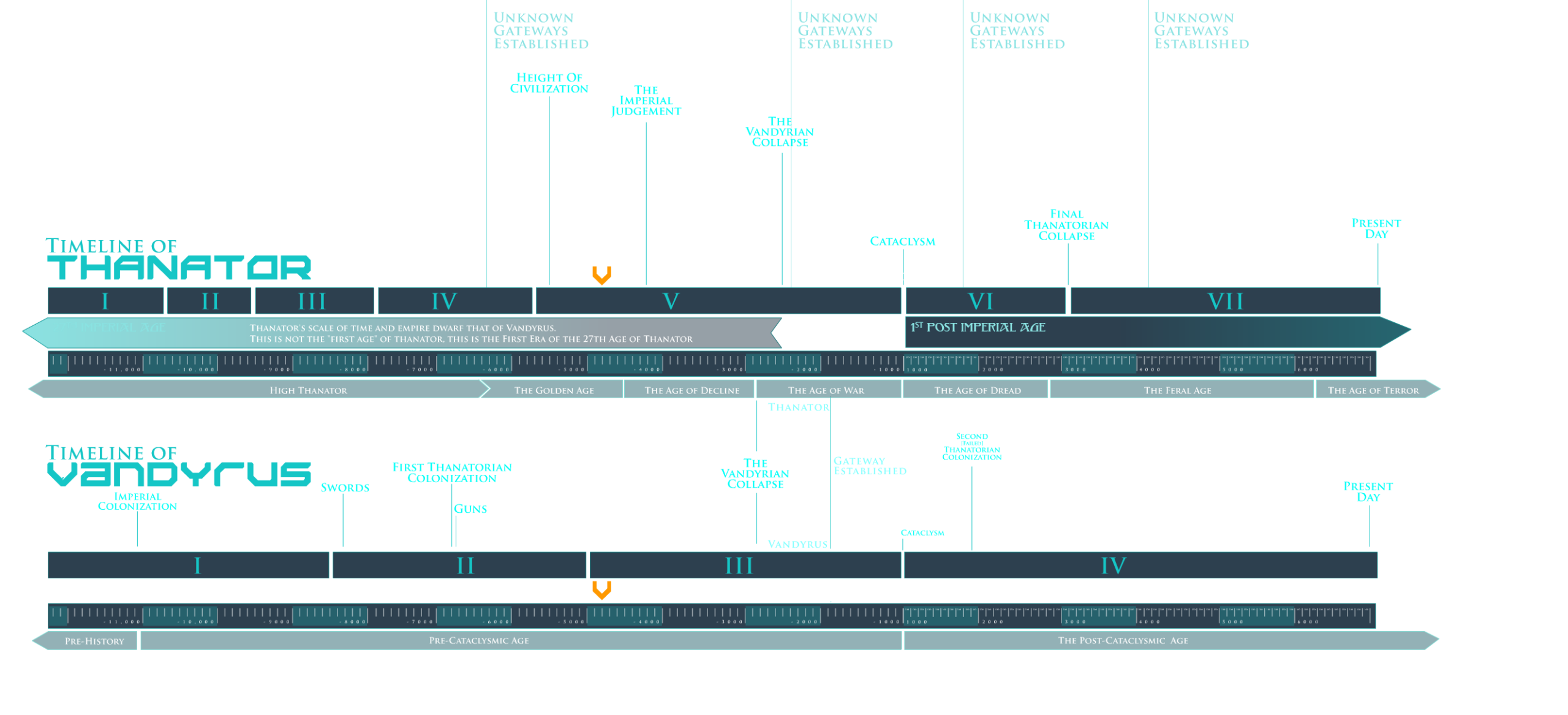
The Ran System:
Before the coming of the Cataclysmic Object—called Doom by the survivors—Ran presided over a family of worlds in rough alignment.
The system boasted planets as varied as the ambitions of their folk: worlds of storm and chemical sea, of verdant forest and rising empires, of savage law and decadent peace. Some bore moons, others rings, some nothing at all but the weight of their own history.
Before the age of doom, Ran’s children moved in stately order, each world bearing its own silent ambitions.
[Inner Resource Worlds]
I. Yalar
The first planet of the Ran system was nothing more than a primordial sphere, wrapped in a choking viridian atmosphere—a world locked in chemical tumult, eternally hostile to biology. Nothing seeded, nothing stirred; the surface swam with toxic clouds and silence.
II. Tyvex
The second planet of the Ran system rose out of ancient swamps. In its earliest age, the lowlands seethed with amphibian life, forms poised at the brink of transformation—half-dreaming of legs, lungs, and dominion beyond the mire. The world’s hunger was primordial, its promise uncertain, its waters thick with unspent potential.
III. Illynar
The third planet of the Ran system, Illynar was a garden world. Forests ran unbroken for leagues; river valleys bred life in profusion. Tribal cultures traced their beginnings along the watercourses, and two distinct peoples edged toward the first, uncertain glimmers of civilization. The world was green, vital, and poised for memory.
[The Imperial Worlds]
Thanator & Kydahn
These planets did not simply cultivate their own soils or histories; they radiated ambition, dominating their neighbors by design and force.
Thanator’s society was relentless—a machinery of conquest, where the refinement of imperial law met a culture of violence that penetrated every institution, from the blood-sport of noble courts to the conscription of whole continents for war. Every festival was edged with cruelty; every law enforced with the threat of steel.
Kydahn, no less ruthless, secured mastery through intellect and precision. Where Thanator flexed, Kydahn calculated, applying superior artifice and administration with a cold authority that tolerated no defiance. Dissent was not crushed in public spectacle, but erased by systems so intricate that challenge became unthinkable. The rivalry between these twin powers dictated the fate of the system; the history of every lesser world was bent by the reach of their fleets and the legacy of defeat they imposed.
The other planets in the Ran system did not orbit only their star, but the gravitational pull of Thanator and Kydahn—the true axis of power. Their ambitions, wars, and bargains shaped the order of all things, and only the Cataclysm could render such striving meaningless. When Doom came, even the greatest designs were stripped of purpose, and dominion became just another memory lost in the dark.
IV. Vandyrus
The fourth planet of the Ran system, Vandyrus was never the heart of empire. It was neither cradle nor capital, but a frontier—provincial, harsh, and unsettled. The planet’s surface was scarred by halls of stone, ziggurats raised to cruel gods, and fortress-cities clinging to the edge of survival. Wolf dens in Vulsa, the lion courts, the serpent vaults beneath Drael—all these were experimental holdings, not homelands. Vandyrus, even in its height, was a deployment site at the rim of greater dominion, a foothold within the outer grasp of the vanished Empire of Vandyria. If there ever was a true Vandyrian homeworld, its name and location have been lost beyond memory—consumed, perhaps, by their own engines of expansion or annihilated in the chaos that followed their collapse.
The Moon of Artana
Artana, Vandyrus’s principal moon, was a world on the threshold. From the surface of Vandyrus, distant watchers sometimes saw faint glimmers—evidence of fire, movement, or the first stirrings of civilization. The moon’s surface was scarred and pitted, but some believed enclaves or primitive settlements were beginning to rise. To the Vandyrians, Artana was a mystery—an object of speculation, never fully understood or mapped.
V. Kydahn
Kydahn, the fifth planet of the Ran system, was a power to rival Thanator—some say its better. The world stood apart: decadent, proud, and technologically sovereign, its cities towers of silent threat and intricate demonstration. Kydahn’s influence checked the ambitions of the system not through open conquest, but through mastery. Its authority was absolute; its reputation, a warning.
VI. Rethka
Rethka was a planet defined by contempt. It served the Ran system as a penal world and industrial graveyard—a dumping ground for toxic waste, spent fuel, heavy metals, and those folk deemed too despised, too dangerous, or too inconvenient to be allowed to die anywhere else. Its surface was scarred by slag fields, poisoned seas, and sealed labor zones where survival itself was considered part of the sentence. Nothing was cultivated here except suffering and neglect.
VII. Titanum & Its Moons Thanator & Jotun
Titanum, the sixth planet of the Ran system, was a gas giant whose secrets eluded even the most ambitious empires. Its atmosphere roiled with storms of unimaginable violence, colored bands wrapping a world whose depths remained unmeasured. Some speculated at a hollow core, others at a rocky or even artificial heart, but no expedition ever returned with proof. Around Titanum orbited two major moons, Thanator and Jotun—each the seat of its own troubled history.
Thanator
First Moon of Titanum
Thanator was the jewel of the Ran system—a moon-empire whose palaces soared above jungle canopies and whose civilization was both feared and envied.
Here, violence was refined into art, and debauchery became the science of courts and warlords. Thanator’s fleets ranged far; its reputation shaped the fates of worlds. Admired by some, abhorred by others, Thanator was never ignored.
Jotun
Second Moon of Titanum
Jotun, the outer moon of Titanum and sister to Thanator, was always the system’s outcast. Cold, sparse, and battered by distance and neglect, Jotun’s surface supported a thin, marginal existence. Its people—never numerous—endured through endurance alone, their societies shaped more by privation and retreat than by ambition or conquest. Even in the high age of Thanator’s empire, Jotun remained peripheral: an afterthought, a harsh frontier at the edge of the system’s true power.
VIII. Rywar
Rywar was a distant, silent planet, its only features the colossal ruins of a civilization that vanished long before any known record in the Ran system. No living ecosystem ever emerged; the world’s surface remained an archive of emptiness, observed but never settled. In the golden ages of Thanator and Kydahn—millennia before Doom—expeditions from both worlds explored Rywar, uncovering glyphs and structures unmistakably marked by the Greater Vandyrian Empire.
These findings dated back nearly three hundred million years, predating the rise of Thanator or Kydahn themselves. Automated fleets—drones and colonial starter systems—had once landed here, mapping and surveying Rywar as a potential hub for Vandyrian expansion.
Vandyrus itself, it is now believed, was originally little more than a designated outpost—its name the legacy of imperial logistics, not of origin or birthright. By the time Thanatorian explorers set foot on Rywar, the automated presence of the Greater Empire had long failed, and what remained of the ancient installations was already decayed by time.