






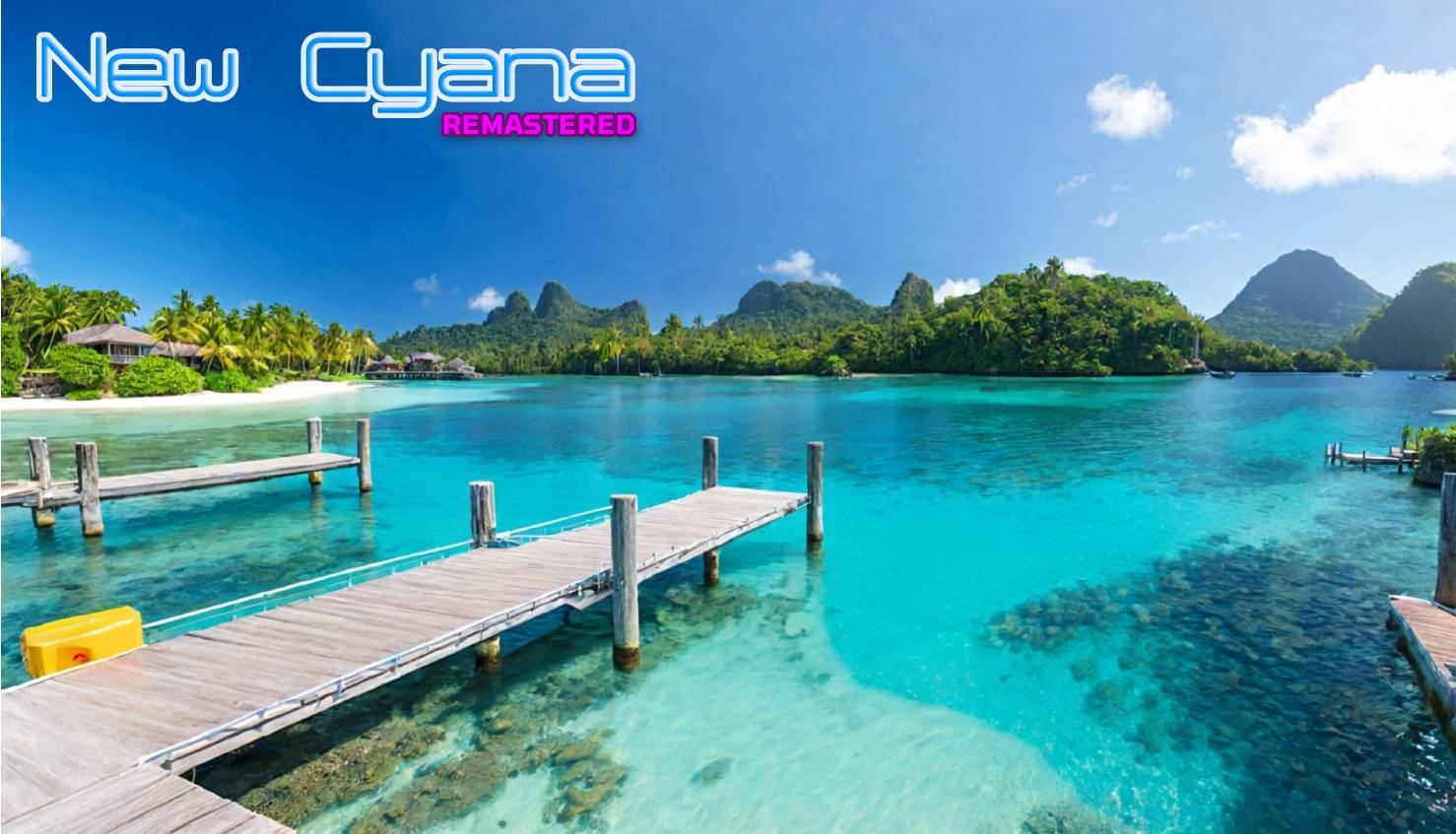
We’re now treating the Unity build as a virtual backlot rather than a final-render target. Environments are first constructed in Unity at full navigable scale, with correct spatial layout, camera height, lens equivalents, and horizon logic, and then “shot” like a physical location using controlled camera passes. Those captures are not intended to be seen by the player directly; they function as raw plates, the same way a film production would capture on-location photography.

BOTTOM: Raw In-Engine Captures
Those plates are then translated into real-world photographic space. The Unity renders are converted out of the game-engine aesthetic and reinterpreted as if they were captured by an actual camera in a physical location. From there, they’re treated like any high-end photo asset: color science is normalized, depth and atmospheric information are reinforced, and then layered with lighting variation, environmental FX, and material complexity that would be impractical or wasteful to simulate in real time.
The result is a hybrid pipeline where Unity provides perfect continuity, scale, and repeatability, while the final backgrounds regain the richness, messiness, and photographic credibility of real locations. In practical terms, Unity is the scouting, blocking, and camera department; the final images are finished like film stills rather than game screenshots. This lets us move fast, stay consistent with the playable world, and still deliver backgrounds that read as lush, grounded, and materially dense instead of “engine-flat.”
This pipeline is deliberately dual-purpose. While the Unity version of New Cyana remains in prolonged development, the AI-converted plates loop back into the engine as reference targets rather than throwaway outputs.
The finished backgrounds become concrete benchmarks for texture density, color response, atmospheric depth, lighting direction, and spatial composition, giving the Unity build far clearer goals than abstract “make it better” iteration ever could.
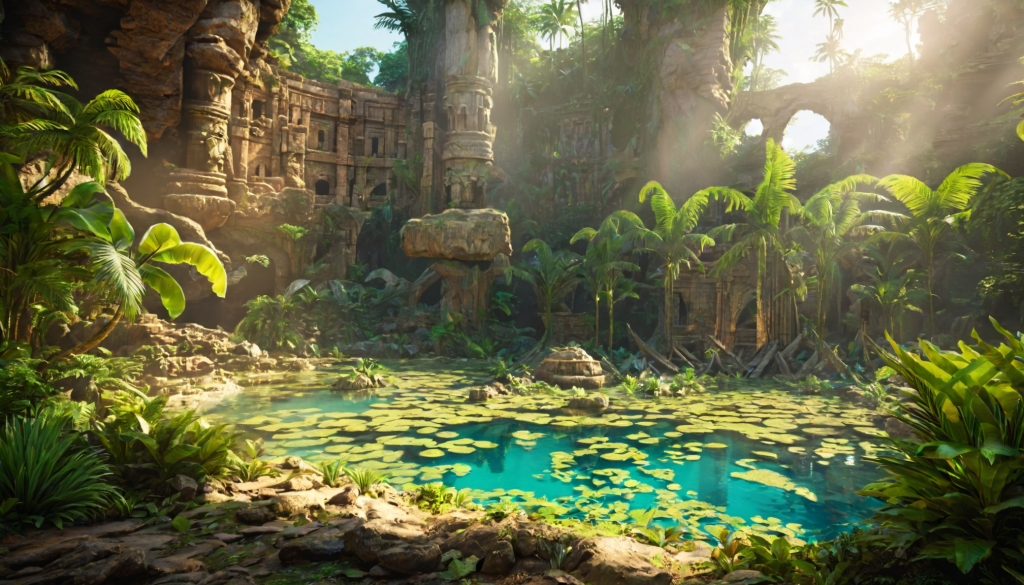

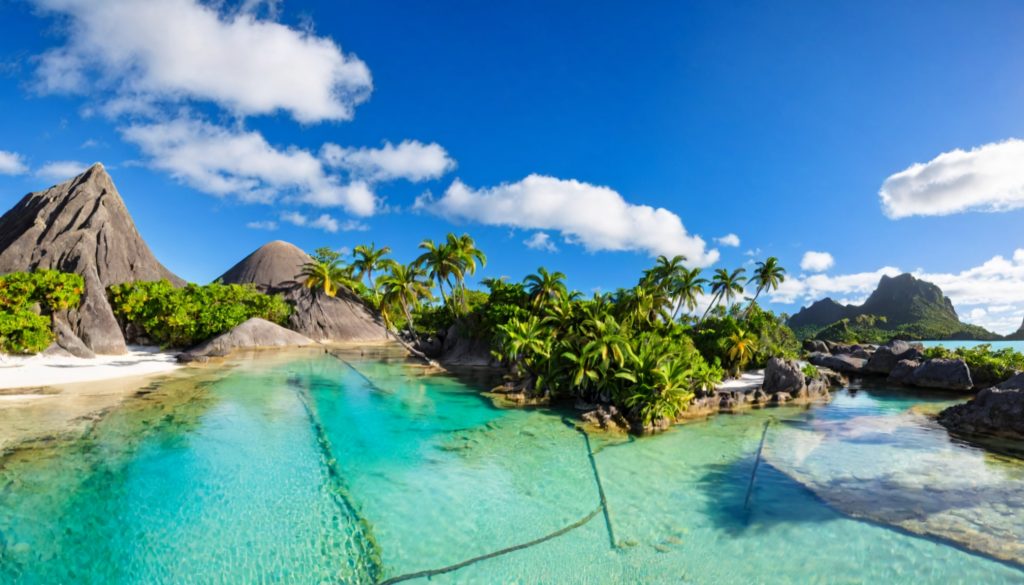
In effect, Unity scenes inform the photographic conversions, and the converted results then inform how Unity itself evolves. Texturing passes, lighting rigs, fog volumes, shoreline breakup, vegetation density, and even layout decisions are adjusted to chase the same visual truths revealed in the finalized images.
This turns the process into a feedback system rather than a one-way render pipeline: every background we finish sharpens the visual language of New Cyana Unity, ensuring that the playable version steadily converges toward the richness and credibility established by the remastered imagery instead of drifting away from it.