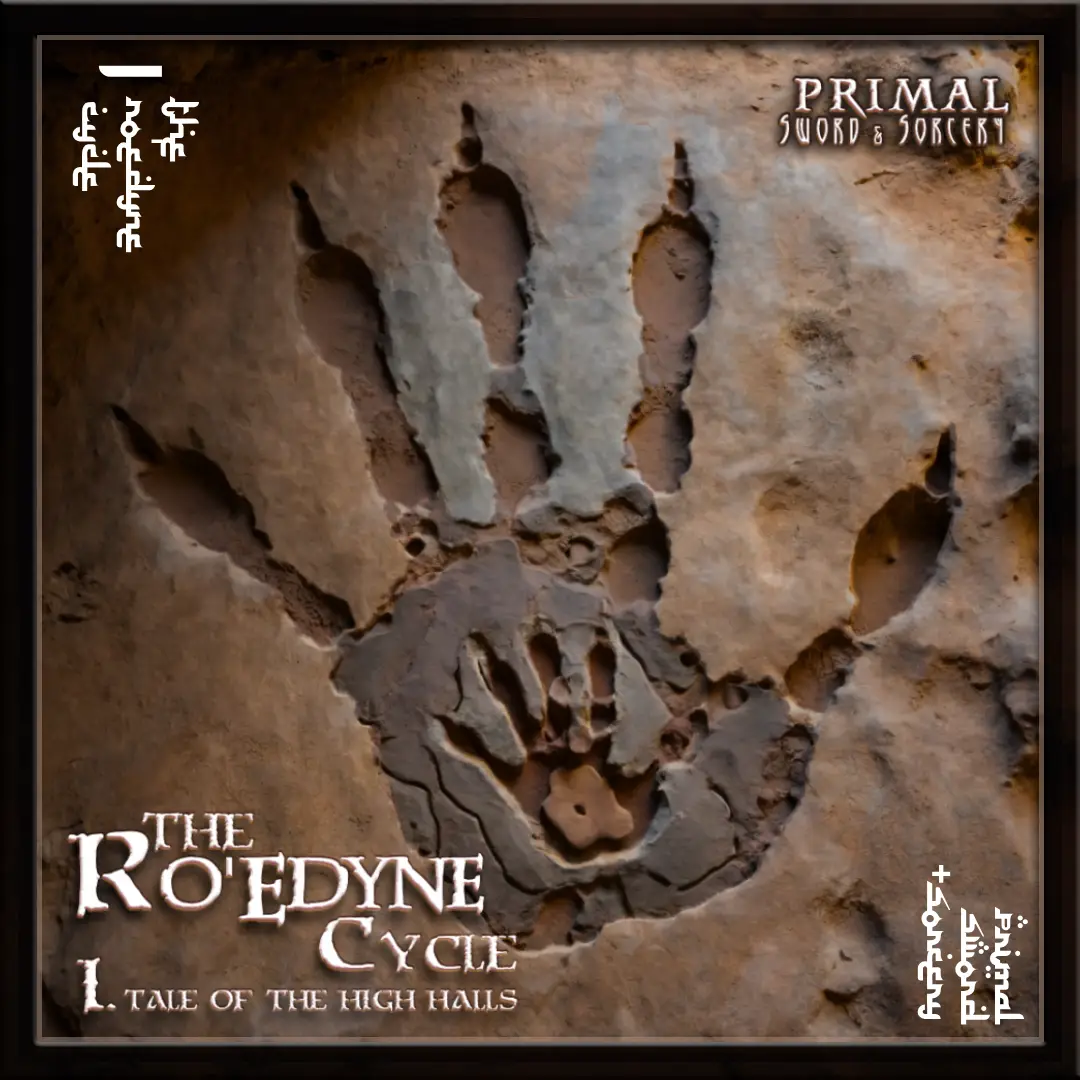
This is how Roedon first learned itself—through song, tale, and voice echoing across the long dark. The Ro’Edyne Cycle is no chronology, but the living heart of the north: mythic, tragic, and half in jest, spun by bards before dates were kept and memory could thin. Here are the stories that made the folk, teaching them not what happened, but what it meant. If the written history is bone, this is the blood—singing out what survived the storm, and naming what was lost.
The
Ro’Edyne Cycle
–NOW AVAILABLE–
–COMING SOON–
II. The Culling of King Thyun
III. The Test of Enthybyrbis
IV. The Founding of The Fearless
V. The Fall of Valbara
VI. Kai-Kha’Lybahn
VII. A Hall of myth and legend
VIII. The little Tymerian war
IX. Trade Hell from Varduun
X. That Cold Northern Attrition
XI. Beware Bleak Mundaynum
I. The Tale of The High Halls
Once—
Once, long, long ago, back in the days, when people believed,
before maps learned to lie, before memory learned to thin,
there was a wager made in halls now lost,
a boast called out, a promise kept in laughter and in stone.
Sing, sing, spirits of legends old—
sing of the giants who walked the black waters,
dragging the ships of Ro’Edyne ashore,
their laughter shaking the bones of the world,
their labor set in the mountain’s heart.
Sing—of hands that cut thunder into stone,
of halls raised with ships for rafters,
of swords not as threats but as covenants,
set deep so the land would remember who built,
who bled, and who left.
Sing—of the revel, of the mirth that shook the heights,
of the horns that called the giants westward,
of promises made not in fear, but in the joy of great work finished.
And when the war-whistles sounded,
sing how the giants turned, stone-faced and sure,
stepping into myth as the mountains bowed low.
Sing—of those who remained:
the daughters of Londorai, proud and wild,
who lingered when their kin marched to their end,
who gave and were given, weaving new blood into Roedon’s earth,
standing beside the folk who remembered,
not the deed, but the story.
Sing—of the halls left behind,
of the stones set by hands now dust,
of ships buried as bones,
of swords deep as vows,
of the covenant never quite broken—
that Ro’Edon would stand back to back with the world
should war come again.
Once, long, long ago, back in the days, when people believed,
the High Halls were raised,
not for the keeping of kings or the counting of years,
but to show the world that those who have no history
can build their own,
and name it true,
and sing it so.
Now, as the halls of Vulsa ring with new voices,
as banners rise that will not bow,
the tale lingers—half jest, half prayer—
a promise built on laughter, loss, and the stubborn refusal to let myth die.
So let them say Ro’Edon is a land with no past—
the stones remember.
The water remembers.
And as long as the song is sung,
the High Halls stand.