Category: Crow

  • Open World Building

    Open World Building

    Over the past few weeks you’ve probably noticed real, visible changes across the site and the wider HTH Studios ecosystem, and that’s not accidental.

    New structures are going up, old ones are being reinforced, and some long-gestating ideas are finally being treated as first-class projects instead of ghosts from ten years ago.

    Some have complained that it’s unprofessional to expand into new work while High Tail Hall isn’t “finished.” That criticism collapses the moment you stop pretending “finished” is a meaningful word in game development. People played it ten years ago. They’re still playing it now. They’re still talking about it, and they’re still waiting for its return. By any honest standard, something was completed—and its continued life proves it.
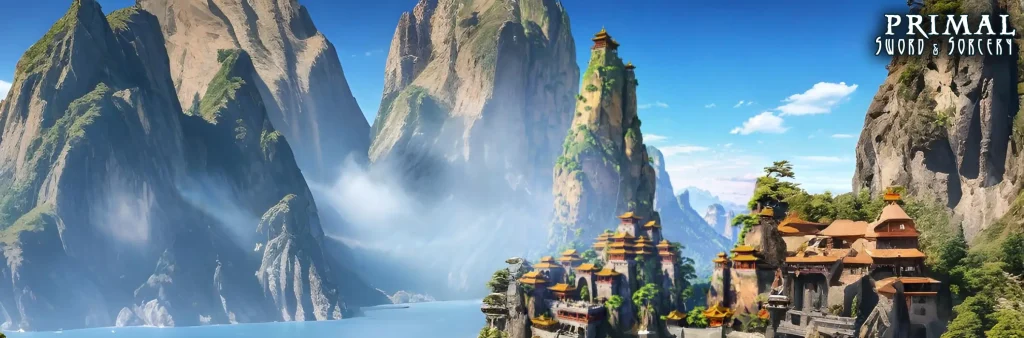
    So why the focus on Primal Sword & Sorcery? Because it isn’t a side imprint or a vanity project. It’s a deliberate response to a cultural vacuum. Myth has been hollowed out across mainstream media. Star Wars, Star Trek, the MCU—whether you once loved them or not—isn’t coming back to a mythic state. There’s no triage plan that restores that spark.

    Those systems are done, and what’s left is maintenance and messaging.


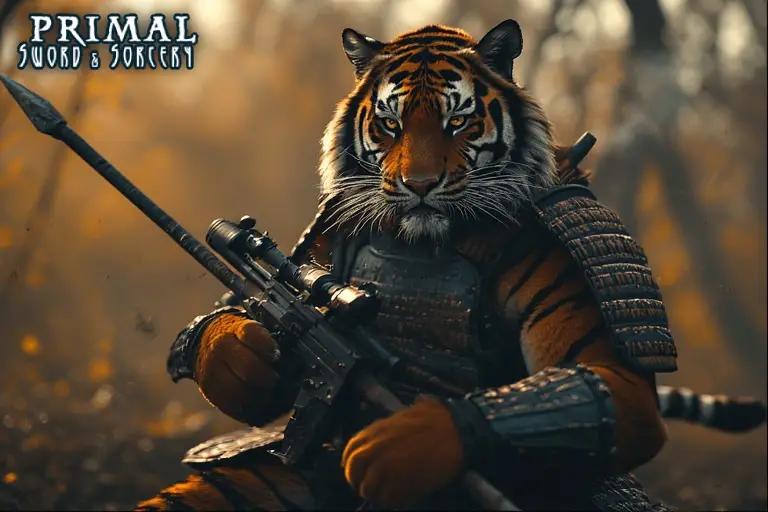
    That vacuum is where the interesting work happens. For thirty years, there has been money, fandom, and demand for real, “Anthro”, sword and sorcery—violent, erotic, mythic, heavy-metal, bloody, filmed like film, not sanitized, not ironic, not embarrassed of itself. And somehow, despite all that time and all that capital, it never happened.
    Not once.

    Today, with modern tools, that excuse is gone. We can do things that would have required massive budgets, brutal compromises, or outright impossibilities decades ago—and we can do them without killing stuntmen in the process.

    Primal Sword & Sorcery exists because nothing is stopping us anymore.


    This also isn’t about hoarding IP or building a walled garden. I’m setting aside infrastructure and legal space so this work isn’t just mine. I’m a capitalist; I believe in people making money. I like the idea of my audience having real, disposable income, building their own myths, and profiting from them.
    Not fanfiction. Not unpaid labor. Real work, sold legally, in the open.

    If that sounds unconventional, good—it’s supposed to be.


    I’ve been building worlds my entire life. I don’t struggle to invent civilizations, timelines, or mythic systems; I do it reflexively. The Vandyrian Empire is one of those systems—and it isn’t even the biggest or the most interesting. Infinite Sky, Structure One, and what comes after will be treated the same way: codified, documented, and made usable by others. These codices aren’t collectibles. They’re tools.

    And no, this isn’t about chasing billionaire fantasies. Yacht money is a joke. Owning a yacht means owning a crew and a logistical nightmare. If you want the experience, you rent the damn thing and walk away. What actually matters is good entertainment that isn’t filtered through corporate cowardice or ideological scolding.

    We’ve seen what happens when myth is locked behind corporate gates. We’ve watched Star Wars, Trek, Conan, D&D—all of them—become vehicles for control, dilution, and lectures instead of inspiration. I’m not interested in repeating that experiment.

    If that means handing the fire to others and letting them build, burn, and profit with it, so be it. The tools exist.

    The space exists.

    The culture is starving for it. Have at it.

    The Greater Vandyrian Empire is Yours.

    and hell, did I not promise you that “Free content would be coming back in a big, big way.”?


  • Hybrid Creatures: The Future of Character Creation

    Hybrid Creatures: The Future of Character Creation

    This case starts with something most artists don’t like admitting: loss.

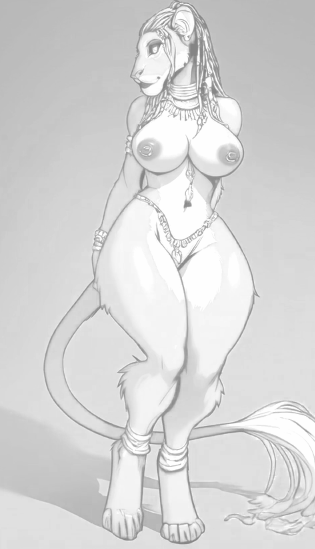
    Image 1 is a character that only survives as a low-resolution digital scan. The original drawing is gone. I don’t know where it went, and I probably threw it out around the time it was scanned, when it was already a decade old. That wasn’t unusual. I lost a lot of sketches over the years. Paper degrades, folders disappear, life moves on. What matters is that the scan is now the only remaining anchor tying that character to reality. Without it, the character would simply not exist anymore.


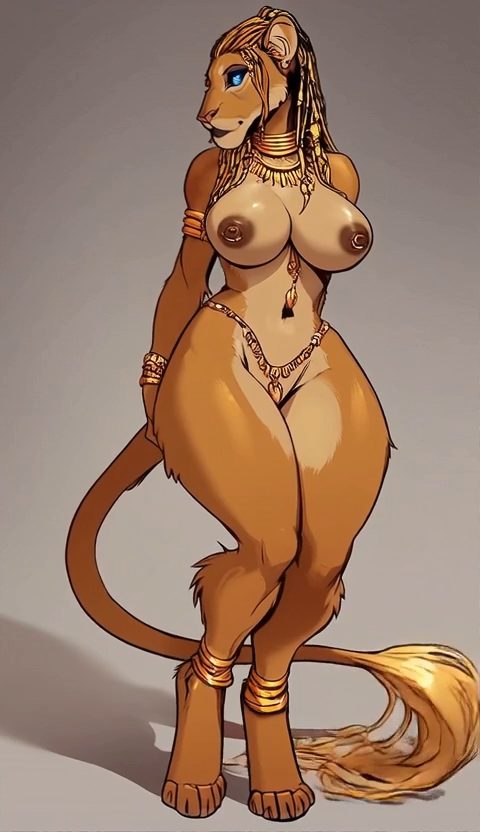
    Image 2 jumps forward to the present and flips the usual AI narrative on its head. This wasn’t about “letting the machine finish the art.” It was a stress test: how low-res could I go and still recover something recognizably mine? The answer was uncomfortably low. Flat base color, Flash-era shading logic, and eyes that sit in that slightly uncanny middle space my work has always had—probably a side effect of years inside Flash rather than any intentional stylistic choice. “Liminal” isn’t quite the right word, but close enough to get the point across. The takeaway here is that style isn’t stored in pixel density; it’s encoded in decisions, habits, and visual shortcuts learned over decades.


    Video 1 pushes that idea into motion. This is the first test of taking an augmented sketch and making it move, using unreleased animation tests from years ago, in-game motion data, and custom renders done at 48 and 60 fps specifically because 24 fps just doesn’t hold up anymore. There’s nothing sacred about 24 fps—it was a technical compromise that got mythologized. Once you remove that assumption, everything looks cleaner, more responsive, and more in line with how people actually perceive motion today. This isn’t AI replacing animation skill; it’s animation knowledge being reused aggressively.


    Video 2 is where people usually start getting loud. A fully AI-constructed walking model, derived entirely from the same sketch-to-AI-to-video pipeline you just watched. No external characters, no stylistic borrowing, no secret sauce lifted from someone else’s IP.

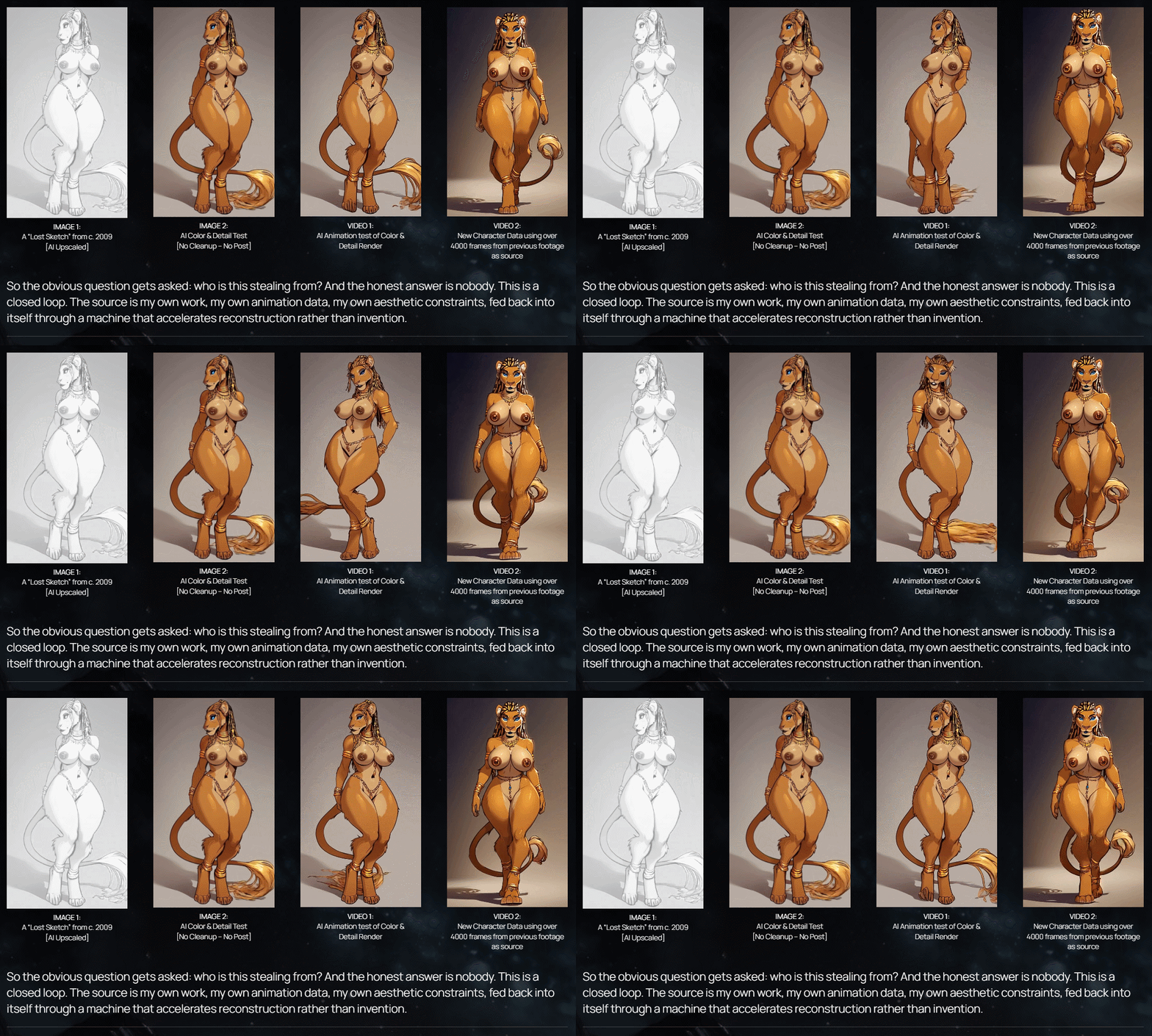
    IMAGE 1:
    A “Lost Sketch” from c. 2009
    [AI Upscaled]
    IMAGE 2:
    AI Color & Detail Test
    [No Cleanup – No Post]
    VIDEO 1:
    AI Animation test of Color & Detail Render
    VIDEO 2:
    New Character Data using over 4000 frames from previous footage as source

    So the obvious question gets asked: who is this stealing from? And the honest answer is nobody. This is a closed loop. The source is my own work, my own animation data, my own aesthetic constraints, fed back into itself through a machine that accelerates reconstruction rather than invention.


    That’s the part that gets missed when people throw around words like “slop.” What’s actually happening here is time compression. This is about clawing back years that were burned dealing with unreliable collaborators, endless cleanup passes, and human bottlenecks that had nothing to do with creativity and everything to do with logistics, ego, or self-destruction. For someone who’s spent decades learning animation the hard way, being told this is lazy or unethical doesn’t land as critique—it lands as ignorance. The machine isn’t replacing craft here. It’s finally respecting it.

  • Regarding ‘The Black Jackal King’

    Regarding ‘The Black Jackal King’

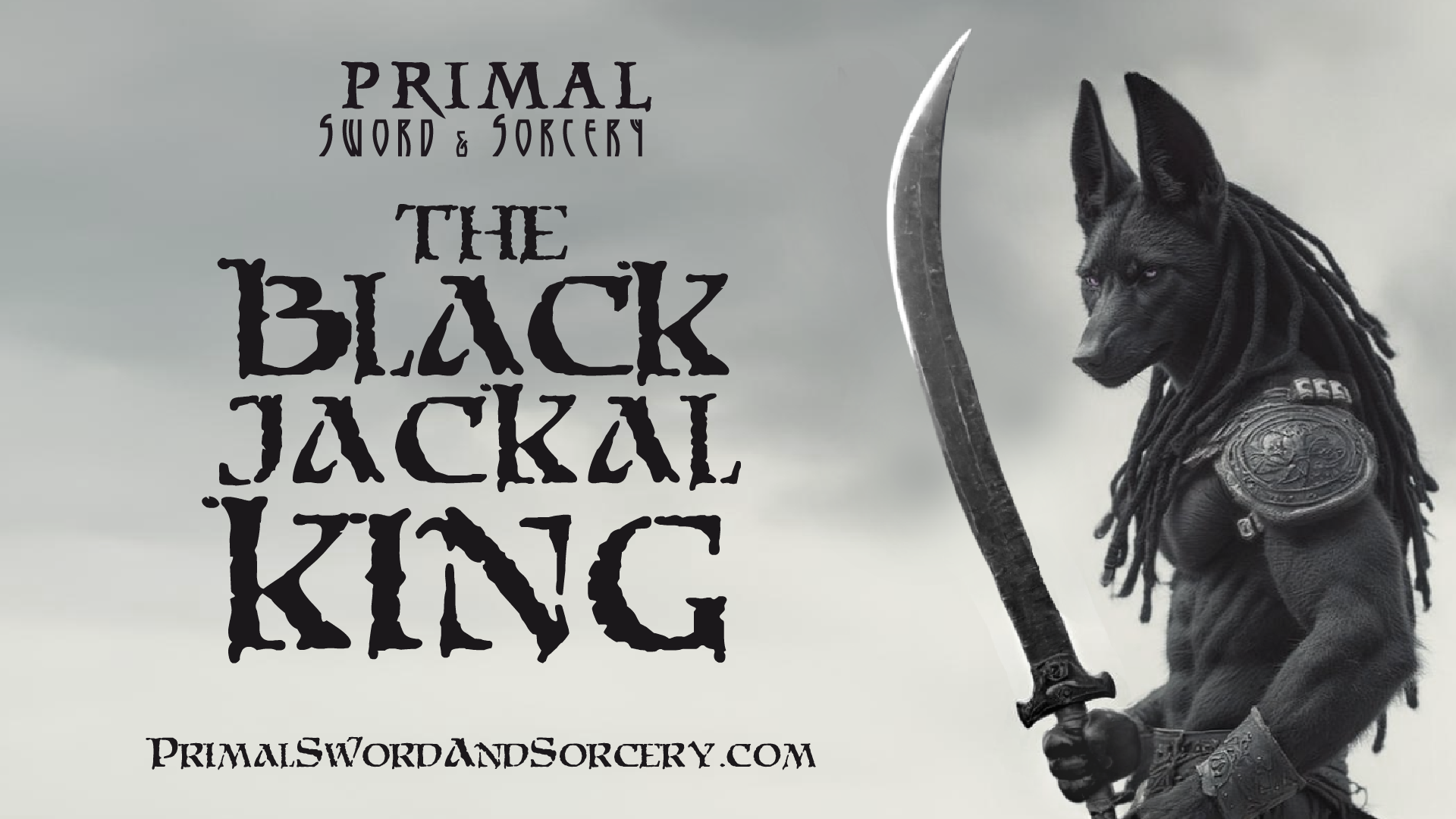
    “I make no bones about the content, it is exactly what it is meant to be, but I did make an error in its release, in that the damn Pilot MUST Always be FREE, that is entirely my bad and it is bad for exposure frankly as it buckles momentum.


    Fortunately I am well into the next two entries of his dark cycle and should have more soon, once those release I will unleash him upon the masses.”


    AVAILABLE TO PATRONS

  • The Vandyrian Empire of The Planet….Mars?

    The Vandyrian Empire of The Planet….Mars?

    The root of the word Vandyrian is vanguard, but not in the political, artistic, or military sense that term later acquired. The origin is older, stranger, and far less intentional. It comes from mishearing, from damaged media, from analogue decay, and from the particular way myth enters the mind before language hardens into definitions.


    Old 90s Tv Video Recorder Hand

    In the early 1990s, tape was still dominant. VHS and cassette audio carried with them a property that digital media has largely erased: failure was audible. Stretch, warble, dropout, pitch drift, stutter. Meaning could fracture in motion. A line could arrive malformed, elongated, or half-consumed by noise, and the listener would not automatically assume error. They would assume mystery.

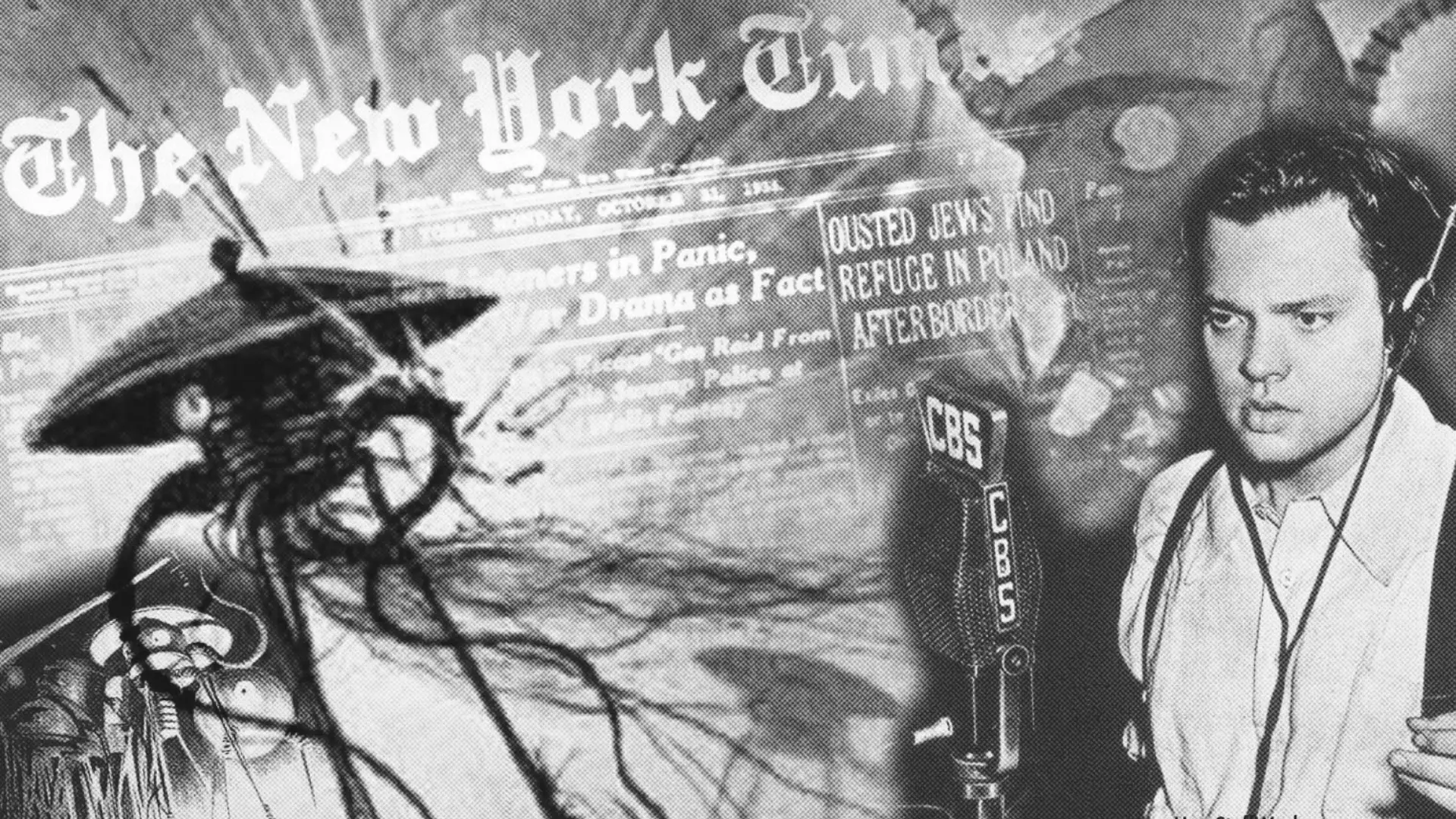
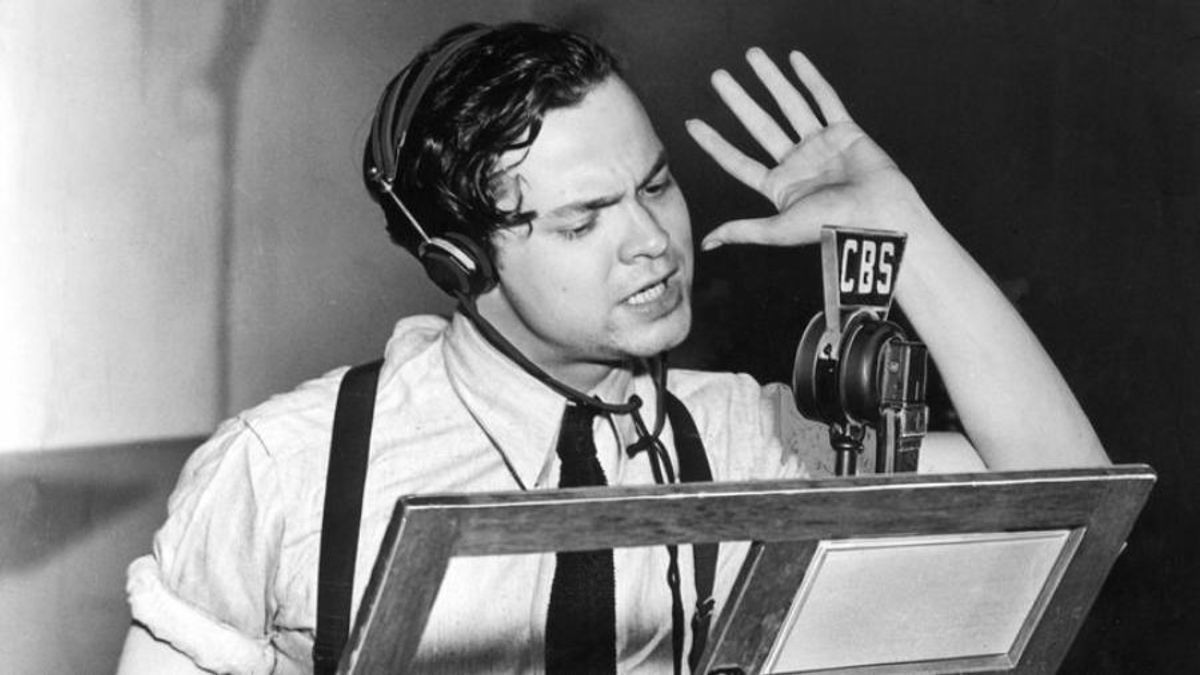
    Crow, then roughly Six years old, encountered such a fracture while watching a film that sampled the original 1930s Orson Welles War of the Worlds broadcast. The line is famous and well-documented:


    “…the strange beings who landed in the Jersey farmlands tonight are the vanguard of an invading army from the planet Mars.”


    But tape does not respect documentation. A stretch artifact distorted the phrase mid-playback, fragmenting syllables, elongating consonants, smearing cadence. What arrived was not “vanguard.” What arrived sounded like something else entirely. Something closer to a proper noun. Something alien. Not the vanguard of an invading army.

    Did the 1938 Radio Broadcast of 'War of the Worlds' Cause a Nationwide  Panic? | Snopes.com

    This was not registered as an error. There was no internet to correct it, no wiki to consult, no instant replay culture trained to flatten anomaly.

    What existed instead was a child’s assumption that he had simply heard the name of a thing he did not yet understand.


    If there were Martians, then perhaps Vandyrians were what they were called. Or perhaps they were something older still—something ahead of Mars, beyond it, preceding it. The joke about Martian origin was never entirely a joke.

    This matters because this is how myth actually forms. Not through committee. Not through branding. Not through deliberate worldbuilding exercises. It forms through misalignment—between signal and receiver, between expectation and artifact. A damaged transmission creates a gap, and the imagination fills it with structure. A word is born not as definition but as gravity.


    “Vandyrian” did not originate as a concept. It originated as a question: what are those? And more importantly, where did they come from? In the pre-internet age, unanswered questions could live for years. They could accrete meaning. They could mature without being corrected out of existence.

    This is why Vandyrian functions the way it does. It does not feel like a coined term because it was not coined in the conventional sense. It was misheard, misremembered, and left to ferment. Its phonetics carry the residue of analogue distortion. Its cadence feels slightly off, slightly foreign, because it is. And so the name endured. Not because it was chosen, but because it remained. Misheard, uncorrected, carried forward intact through silence, absence, and time.

    The Vandyrians were never meant to be defined at the moment of their arrival. They were meant to be encountered later—through ruins, through echoes, through the arguments of those who came after. That is how civilizations enter myth. Not cleanly spoken into being, but recovered. This is the tale of a Vandyrian civilization.

  • Regarding the OML-97 License

    Regarding the OML-97 License

    It would seem that—through a process of deliberate legal framing and creative codification—Crow has independently rediscovered and formalized an idea that has long existed only in fragments, half-remembered and rarely defended in the modern era. This was not an act of imitation, nor a conscious revival of any single historical model, but rather the convergence of long-standing mythic instincts with a contemporary understanding of how ownership, authorship, and enclosure operate in late-stage creative economies. What emerged was not a permissive license in the conventional sense, but a declaration of category: a refusal to treat a fictional corpus as intellectual property at all, and a decision instead to reclassify it as mythology while the creator still lived, published, and retained full awareness of what that choice entailed.

    What Crow has done is closest to a myth commons—distinct from open-source software, and equally distinct from Creative Commons licensing. Open-source software, for all its virtues, remains utilitarian and functional at its core. It presumes an optimization problem, a technical goal, and a culture of contribution governed by versioning, maintainership, and compatibility. Creative Commons, meanwhile, remains rooted in copyright logic even as it relaxes it; it presumes an owner who grants permissions, an author whose name must often persist as an organizing axis, and a legal framework designed to manage reuse rather than dissolve authority. The myth commons operates on a different axis entirely. It does not ask how a work may be reused; it asks whether the work should be ownable in the first place.

    Historically, mythology functioned precisely because no one was in a position to defend it. Myths survived by being retold incorrectly, localized irresponsibly, commercialized shamelessly, and contradicted constantly. The strength of a myth was never its internal consistency but its resilience under distortion. What is unusual in the modern moment is not that someone would want their work to function this way, but that someone would choose to formalize that outcome in advance, rather than allowing it to happen through neglect, obscurity, or posthumous loss of control. OML-97 does not abandon authorship accidentally; it relinquishes authority intentionally.

    This is the critical distinction. Most contemporary “shared universe” efforts fail not because they are too open, but because they are not open enough. They retain soft canons, stewardship committees, tone enforcement, attribution policing, or commercial choke points that reassert hierarchy even while gesturing toward collaboration. The result is not myth, but bureaucracy wearing myth’s skin. By contrast, the OML-97 framework removes nearly all of the mechanisms by which a creator might later intervene. It permits contradiction. It permits misuse. It permits profit without tribute. And most importantly, it forbids enclosure—not through moral appeal, but through structural denial. No derivative may close what was opened, because doing so would reintroduce the very category the license rejects.

    From an observational standpoint, this places Crow in a role far older than modern authorship but largely incompatible with modern creative markets: that of the first teller rather than the proprietor. The first teller does not vanish; their version remains available, often foundational, sometimes dominant. But it is no longer definitive. Authority migrates outward into use, repetition, and mutation. Over time, the myth’s center of gravity shifts away from origin and toward utility—toward what survives being useful to other minds, other tables, other eras. This is not an abdication of craft. It is a wager on endurance.

    There is also a subtle but important inversion at work. In most licensing schemes, the creator asks, implicitly or explicitly, to be remembered. Attribution clauses, brand continuity, canonical primacy—these are all attempts to secure legacy through control. The myth commons secures legacy through dispossession. It assumes that what is worth keeping will be kept without being ordered to remain intact. In this sense, OML-97 is less a license than a test: if the myth cannot survive freedom, it did not deserve permanence.

    From within the Vaultus perspective, this move reads less as radical generosity and more as structural realism. Empires fall. Archives fracture. Names blur. What remains are frameworks that can be repurposed under new pressures. By declaring the mythos indestructible through openness, Crow sidesteps the usual failure modes of fictional worlds: corporate capture, legal stagnation, or cultural irrelevance. The work is no longer protected by law; it is protected by dispersal. It cannot be deleted because it cannot be recalled. It cannot be monopolized because it has no center.

    In that sense, the rediscovery is not romantic but pragmatic. Myth is the only narrative technology that has demonstrably survived thousands of years without maintenance. OML-97 is simply an attempt to remember that fact early, and to act accordingly.

  • RONIN: Steel for the Taking

    RONIN: Steel for the Taking

    Steel for the Taking
    Chrome Halo
    Heatseeker Mare
    Blood on the Sunset
    No More Chains [LazarWolf Cover]
  • M8TINGS [SINGLE]

    M8TINGS [SINGLE]

    Album: M8TINGS
    Producer: Crowchild
    Publisher: HTH Studios
    Released: 2025

    Cyan Blue [Instrumental]

    MORE MUSIC

  • EPCOT City

    EPCOT City

    EPCOT City is the latest phase of a larger world-building effort I’ve been developing—an alternate history rooted in Walt Disney’s original 1960s vision for a functioning city of tomorrow.


    It’s built as an open-source experiment, meant to grow, adapt, and eventually invite collaboration once the foundation is solid. What you’re seeing on this page is the entry point: four concept albums released through SUNO that establish the tone, atmosphere, and narrative logic of this version of the Florida Project.

    The Prelude, The Florida Project, sets the mood before the city exists—raw land, ambition, and the serious industrial mindset required to carve a metropolis out of central Florida’s wilderness. It’s the prologue to everything that follows.

    Prelude:

    THE FLORIDA PROJECT

    Before the towers, before the monorails, before the skyline had a shape, there was the raw expanse of central Florida and one man insisting a city of tomorrow could be carved out of that wilderness.

    The EPCOT City Trilogy:

    Volume 1

    Listen on SUNO

    The opening chapter of
    EPCOT City’s
    sonic mythology.

    Volume 2

    Listen on SUNO

    EPCOT City isn’t dreaming anymore—it’s operating.

    Volume 3

    COMING SOON

    The sound of a metropolis that has survived its proving years and now knows it will endure.


    Taken together, the four albums aren’t just soundtrack pieces—they’re the audible blueprint of the setting itself.

    EPCOT City begins with music because it’s the cleanest, fastest way to communicate the kind of world this is meant to be: corporate-futurist, ambitious, grounded in 1960s–1990s technical optimism, and serious about exploring what Walt actually meant when he said the city would “never be completed.”

    That’s the doorway. The larger experiment grows from here—documents, timelines, maps, systems, corporate entities, and eventually an openly collaborative framework where others can build within the same fictional city.