To view this content, you must be a member of Downloads Patreon at $10 or more
 Unlock with Patreon
Already a qualifying Patreon member? Refresh to access this content.
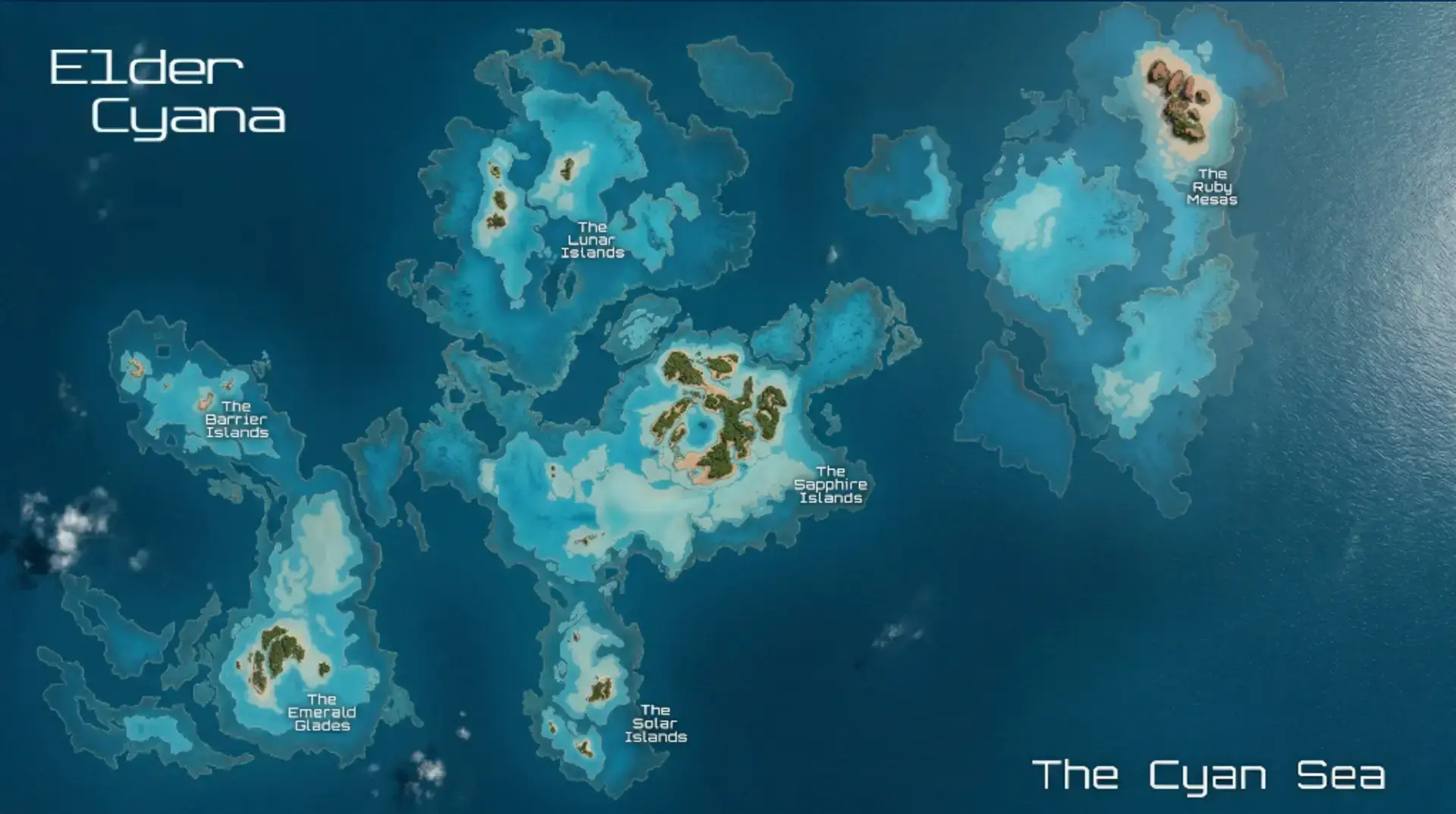
The Cyan Sea preserves its own memory in stone. What appears today as a tranquil scatter of tropical archipelagos is, in fact, the exposed crown of a far older continental structure — fractured, drowned, and reborn across successive geological epochs. The formation known collectively as Elder Cyana, Old Cyana, and New Cyana represents not three separate island chains, but three visible phases of a single tectonic organism slowly sinking into the sea.
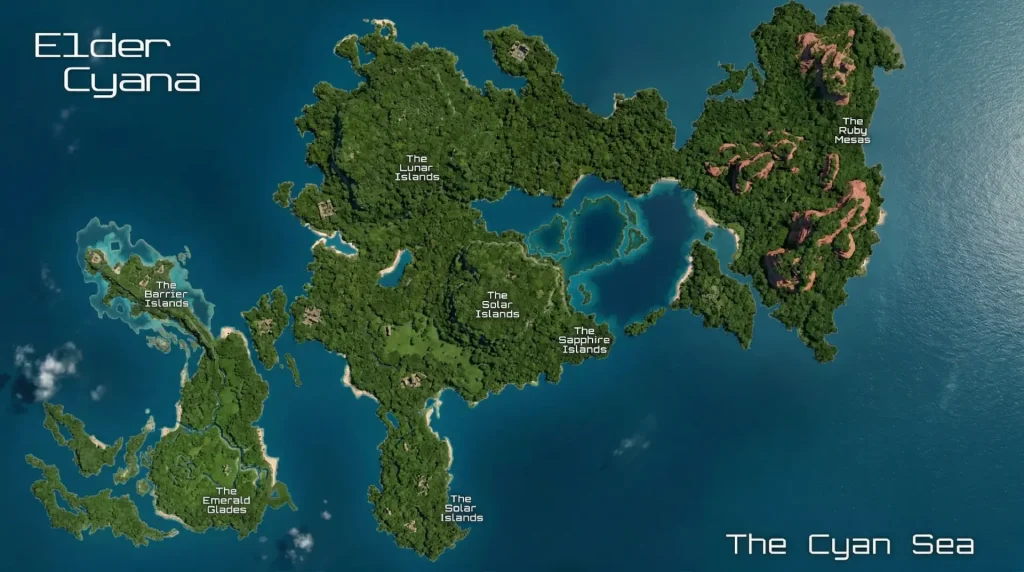
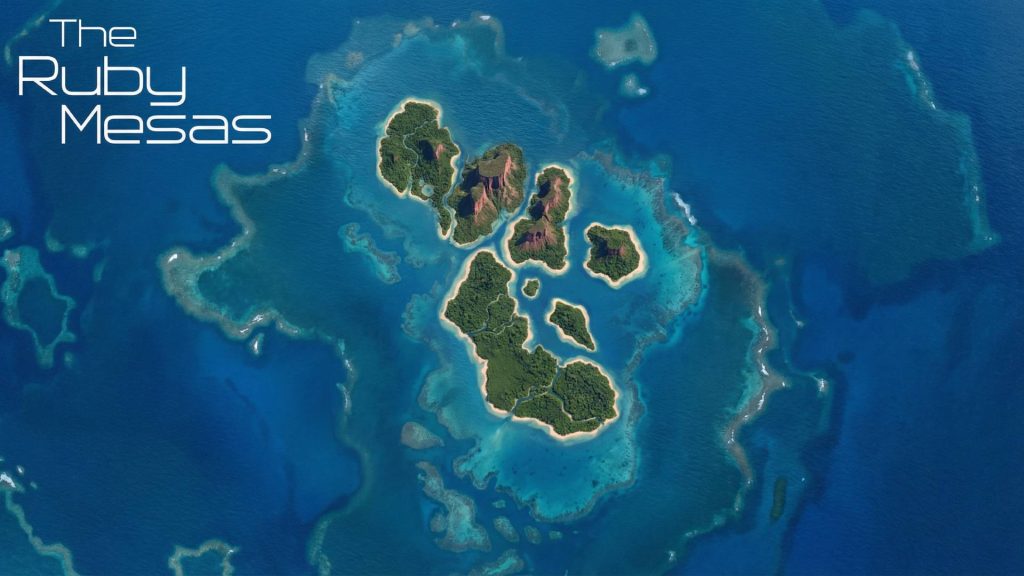
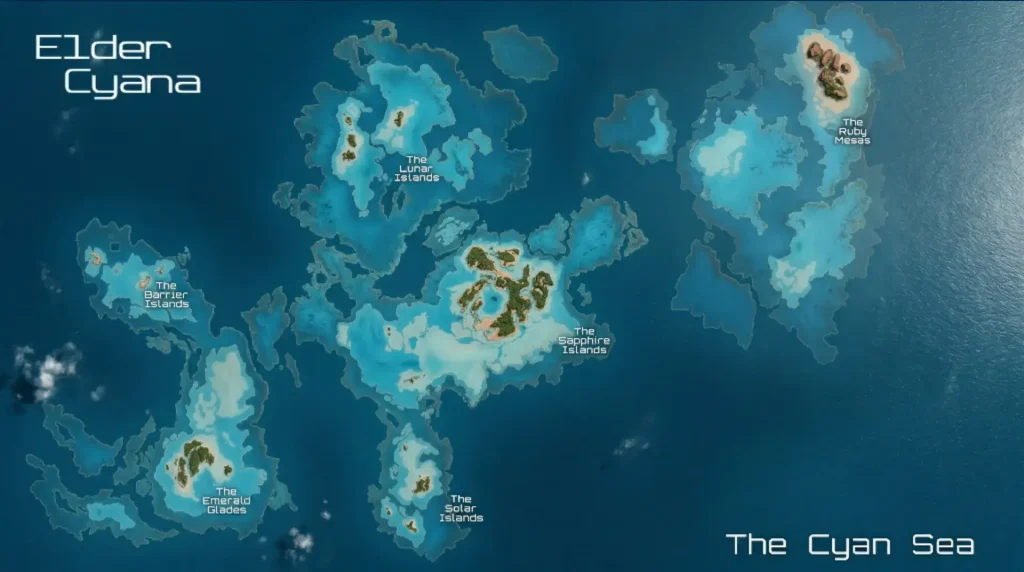
Elder Cyana is the oldest stratum — a massive uplifted formation whose outline remains faintly visible in bathymetric surveys beneath the eastern quadrant of the Cyan Sea. Satellite imaging shows collapsed calderas, submerged plate shelves, and radial fracture lines indicating catastrophic seismic destabilization in antiquity. What remains above water today — the Ruby mesas and their surrounding reefs — are merely the hardened ridgelines of what was once a dominant landmass. Elder Cyana was not eroded into nothing; it subsided.
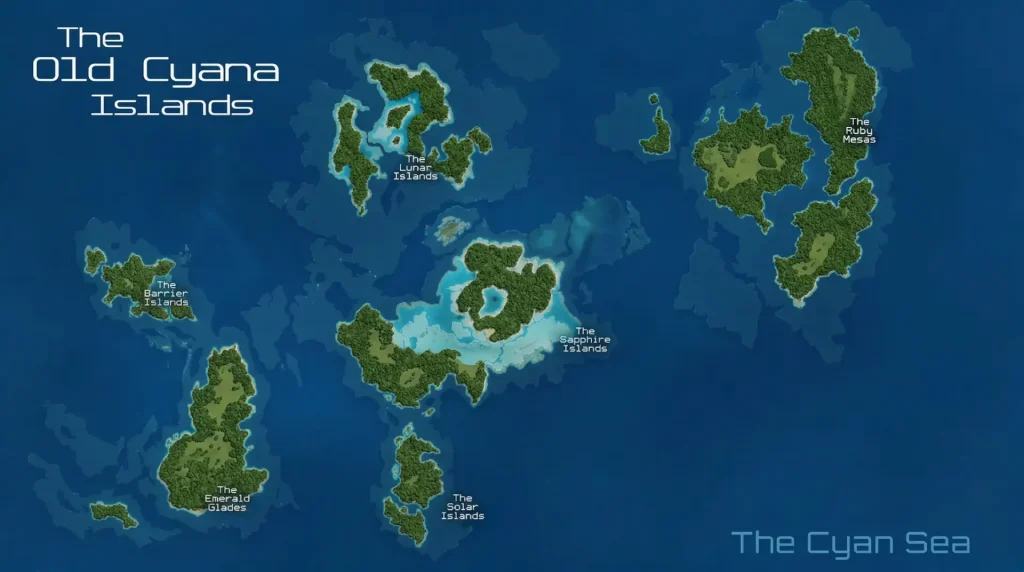
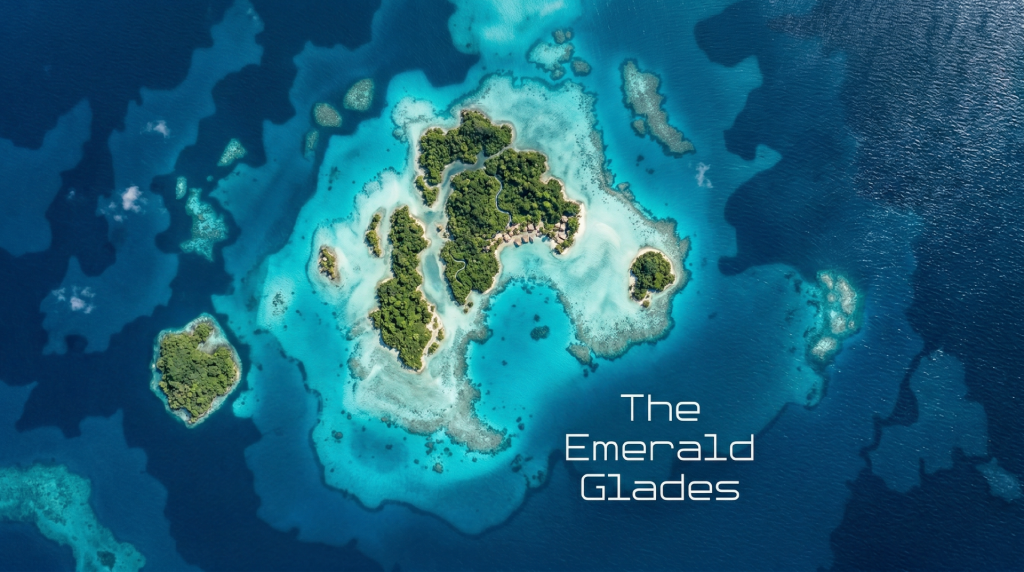
Old Cyana formed along the stabilized western plate margin following that collapse. It represents the second flowering — a broader, more temperate spread of islands and shallow basins. The Lunar Islands and the Barrier Islands occupy portions of this middle epoch. Geological cores show layered sediment deposition consistent with long habitation cycles, interrupted by ash signatures from volcanic activity inherited from Elder Cyana’s destabilization. Old Cyana was less mountainous, more navigable, and likely more politically centralized in its peak era. Its decline appears gradual rather than catastrophic — shoreline retreat, rising seas, and slow fragmentation rather than sudden annihilation.
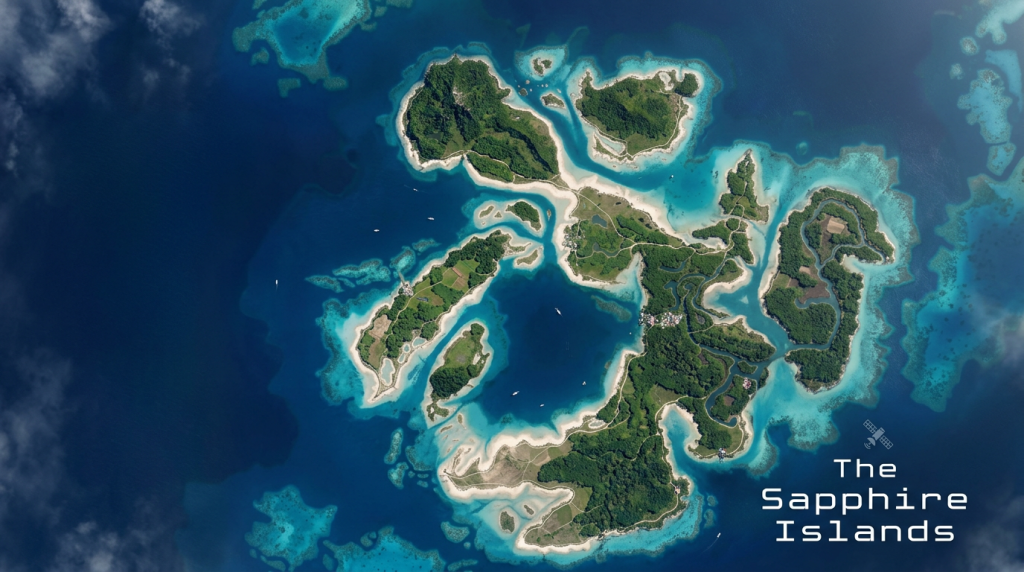
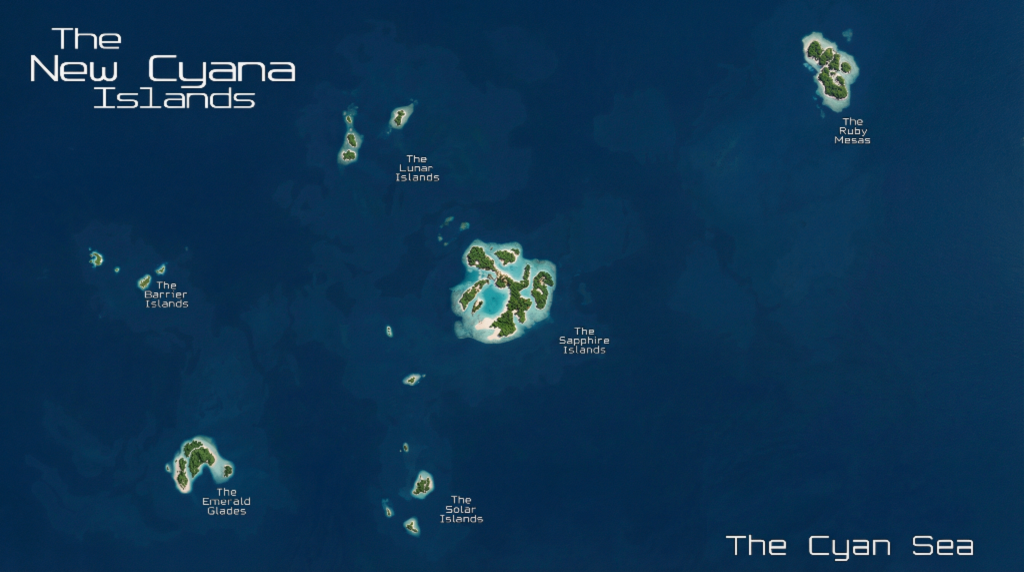
New Cyana is the surviving apex — the central Sapphire Islands and their surrounding satellite chains. What remains today is the tectonic high point of the entire formation, stabilized by the residual mantle uplift that once supported its predecessors. It is smaller in landmass than either Elder or Old Cyana at their peaks, yet more structurally secure. Coral development is dense. Reef walls form natural breakwaters. Lagoons remain unusually clear due to convergent current shielding created by the drowned shelves of its ancestors.
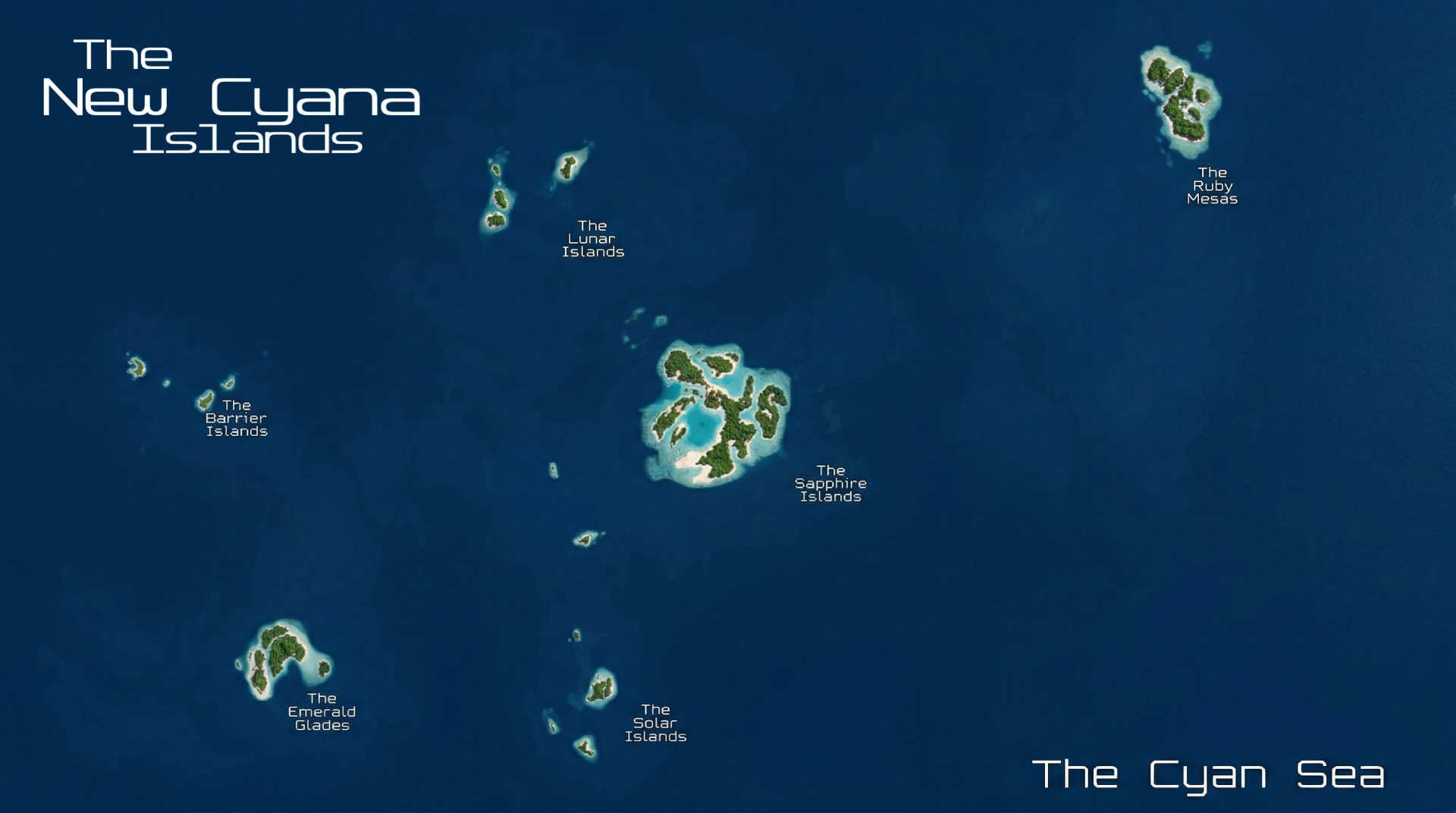
The relationship between the three is not merely historical but structural. Elder Cyana’s collapse created the shallow banks that allowed Old Cyana to flourish. Old Cyana’s erosion formed the sediment beds that now anchor New Cyana’s reef systems. Each generation stands literally upon the bones of the last.
Culturally, the continuity mirrors the geology. Oral traditions among local tribal councils speak of “Three Suns” or “Three Crowns,” describing a land that was once vast, then broken, then refined. Archaeological evidence supports layered occupation across at least two major migration waves. Megalithic fragments found on New Cyana align compositionally with stone quarried in the now-submerged sectors of Old Cyana. The monuments being restored today are not isolated relics — they are fragments of a lineage stretching back to Elder Cyana’s vanished highlands.
From orbit, the progression is unmistakable. The eastern drowned mass of Elder Cyana. The broad, partially submerged arcs of Old Cyana. The concentrated brilliance of New Cyana at the tectonic crown. A geological inheritance rendered in gradients of turquoise and deep ocean blue.


New Cyana Publications
Revised Edition
1997
INTRODUCTION
The Tectonic Record
THE ORAL PREHISTORIES
The First Peoples
Mysteries of the Cyanese
Wars with The Komodotaj
The Elder Ruins
ELDER CYANA
Shadow of an Antique Throne
The Northern Fortress
Central City States & The High Kings
The Elder Civilization
The Emerald Realms
The Zyol’ma Empire
OLD CYANA
The Sapphire Realms
The Second Peoples
The Nariatt Kingdoms
The T’Zol Tribes
The Ancient Civilization
NEW CYANA
At the foundation
Natural Law
The Modern Age
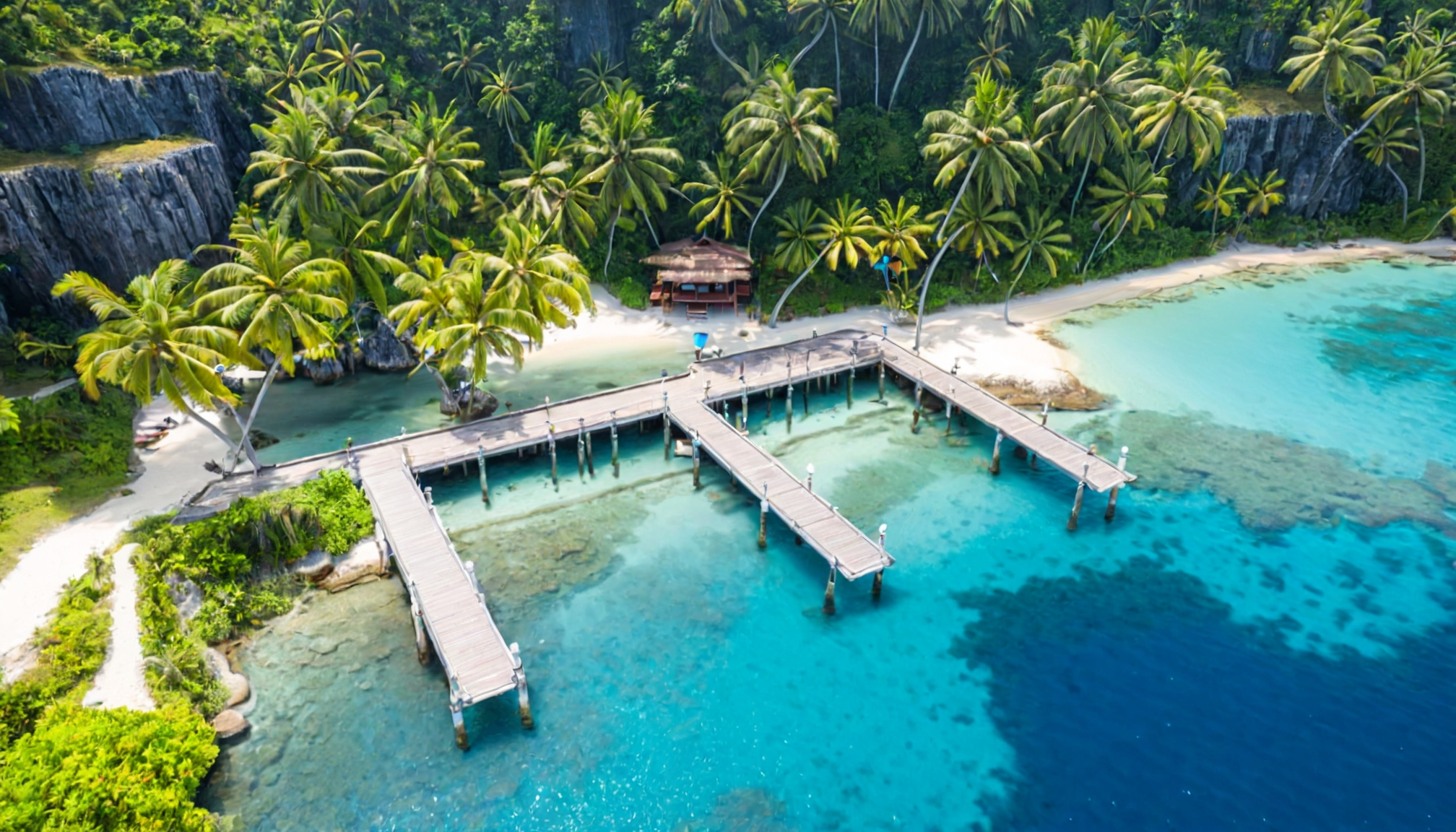
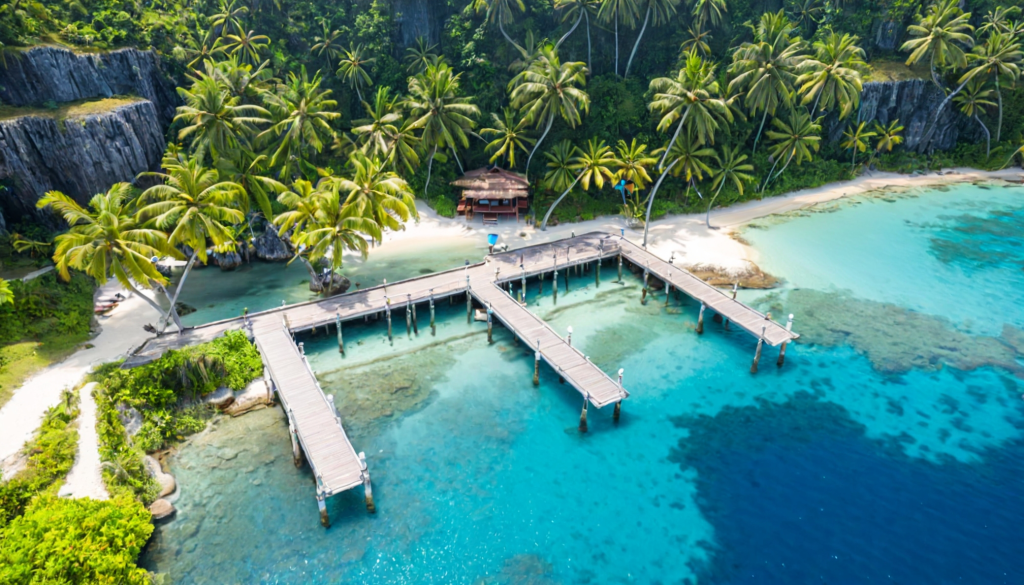
The Sapphire Bay docks serve as the main point of arrival for visitors, whether they come by ferry, Lia Tan boat, private yacht, or seaplane tender. The docks are simple but welcoming, sturdy wooden piers stretching out into the turquoise water, framed by white sands and palm groves. From here, guests disembark and step directly into the heart of the islands, greeted by Nariat hosts and the first hints of paradise.
Though modest in design, the docks are the living threshold between the outside world and New Cyana’s sun-soaked archipelago, the symbolic first step into paradise. Just beyond the landing, guests will find the Visitors’ Center, the first of many located across the archipelago. Staffed day and night, the center provides assistance with orientation, reservations, and personal requests, ensuring a smooth arrival. Similar centers are found at every major hub across the islands, so visitors are never far from help or guidance,
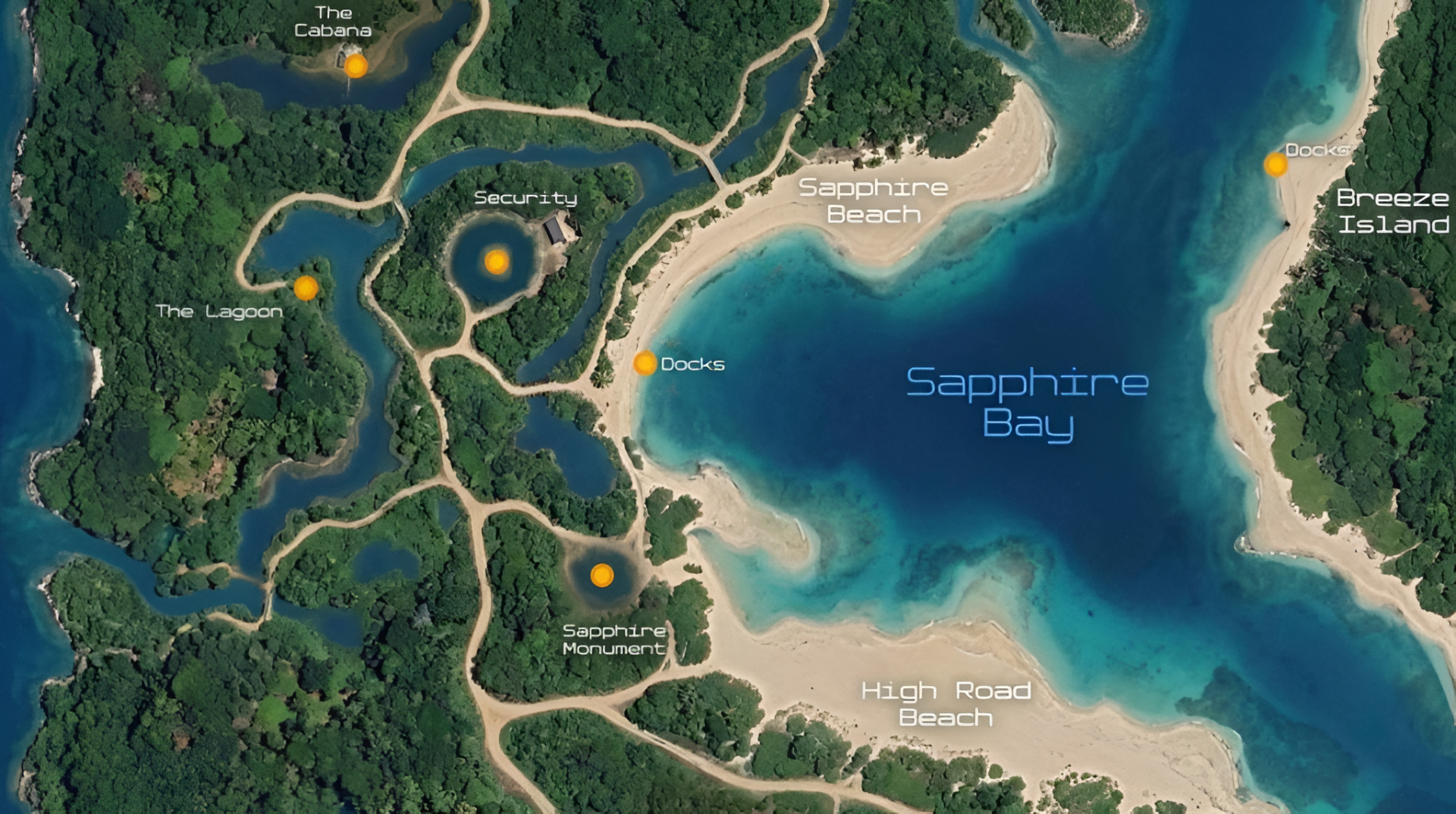
Every journey into the New Cyana Islands begins at Sapphire Bay, the central hub where visitors first set foot on the archipelago. Whether arriving by seaplane, ferry, or sleek private skiff, guests disembark at the pier that stretches into waters so clear they mirror the sky. This is the island’s front door, the threshold between the outside world and the wonders of New Cyana.
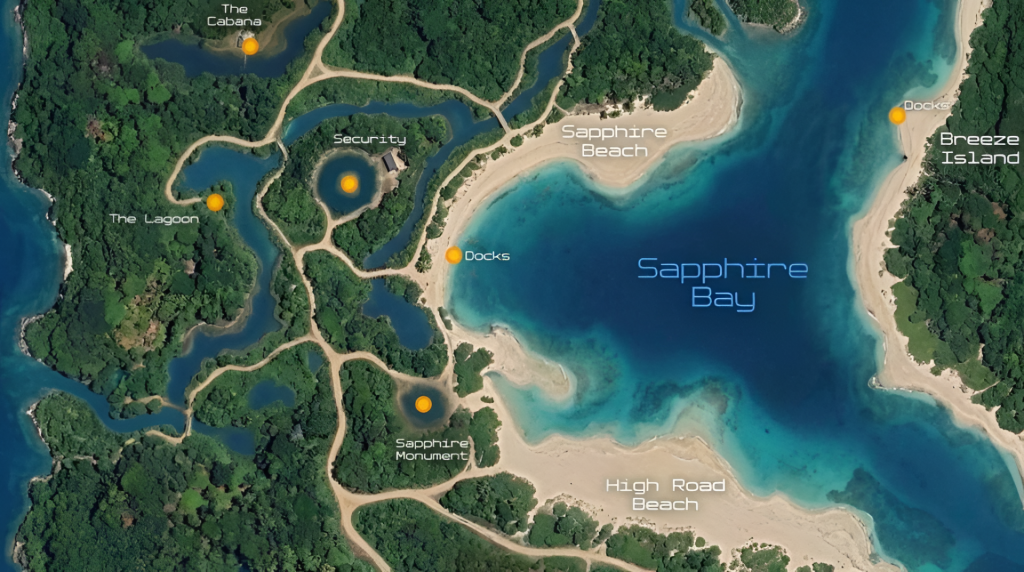
The bay is deliberately uncluttered to preserve its sense of arrival. White sand arcs around the lagoon, while palms lean over the shore, offering shade from the equatorial sun. Nariat greeters in bright ceremonial paint welcome travelers with drinks served in carved shells and woven garlands of island flowers. From the pier, guests are invited to choose their path into the greater experience.
To the west lies the lagoon, where daylight leisure transforms into luminous nightlife. To the south stretches the Sapphire Forest, a labyrinth of mist, vines, and hidden pools. To the east, on nearby Breeze Island, rises the villa, and to the north, the fabled Tower Point, a vertical city of indulgence.
Though the bay is serene, it is never empty. Fishing canoes and guest ferries crisscross the water, music drifts faintly from distant clubs, and the constant pulse of waves sets the rhythm of the island.
By night, torches are lit along the pier, guiding travelers back from their first forays into the archipelago. Every path leads outward from Sapphire Bay, but most return here, making the bay both the beginning and the heartbeat of the islands.