To view this content, you must be a member of Downloads Patreon at $10 or more
 Unlock with Patreon
Already a qualifying Patreon member? Refresh to access this content.
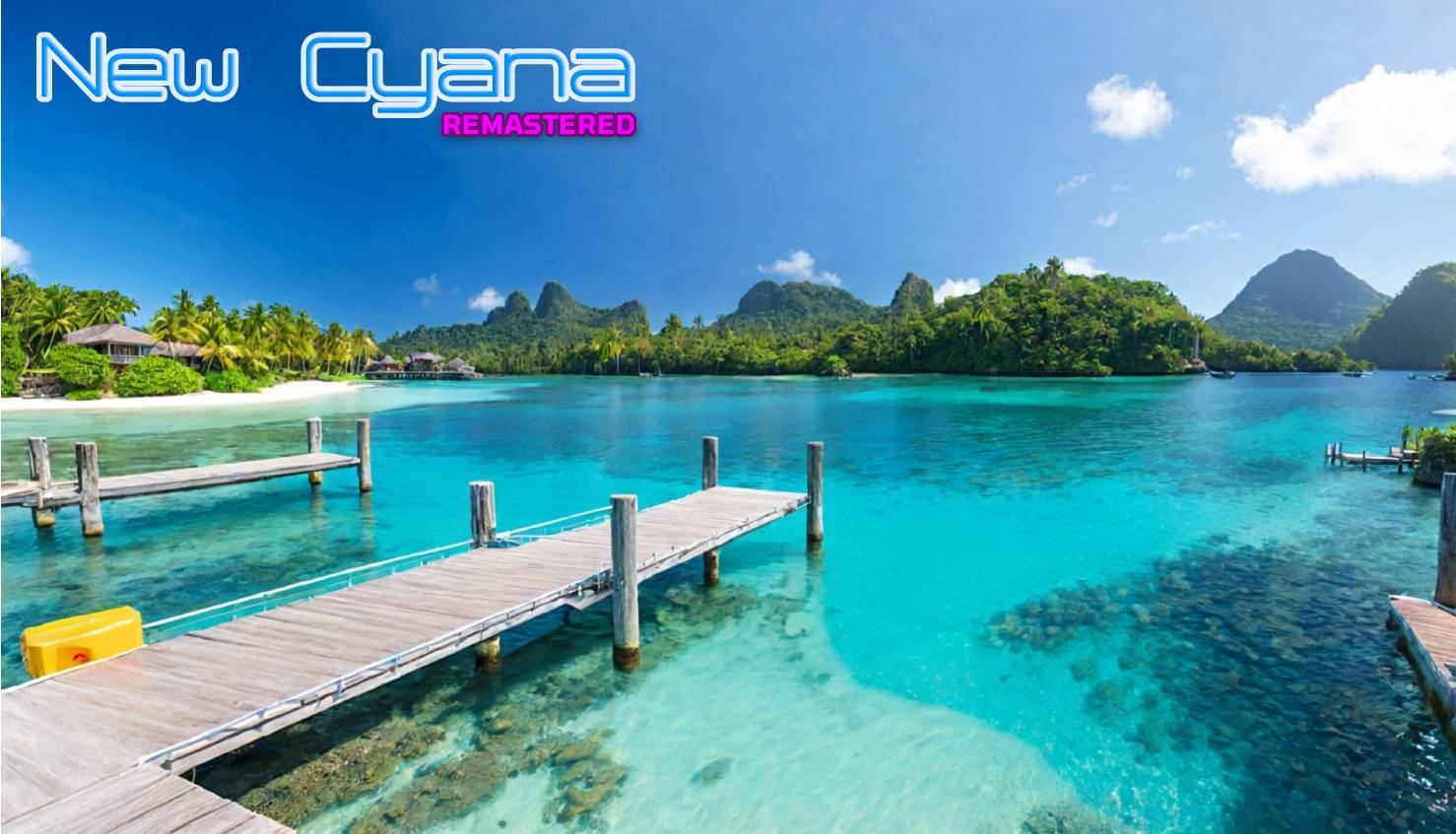
We’re now treating the Unity build as a virtual backlot rather than a final-render target. Environments are first constructed in Unity at full navigable scale, with correct spatial layout, camera height, lens equivalents, and horizon logic, and then “shot” like a physical location using controlled camera passes. Those captures are not intended to be seen by the player directly; they function as raw plates, the same way a film production would capture on-location photography.

Those plates are then translated into real-world photographic space. The Unity renders are converted out of the game-engine aesthetic and reinterpreted as if they were captured by an actual camera in a physical location. From there, they’re treated like any high-end photo asset: color science is normalized, depth and atmospheric information are reinforced, and then layered with lighting variation, environmental FX, and material complexity that would be impractical or wasteful to simulate in real time.
The result is a hybrid pipeline where Unity provides perfect continuity, scale, and repeatability, while the final backgrounds regain the richness, messiness, and photographic credibility of real locations. In practical terms, Unity is the scouting, blocking, and camera department; the final images are finished like film stills rather than game screenshots. This lets us move fast, stay consistent with the playable world, and still deliver backgrounds that read as lush, grounded, and materially dense instead of “engine-flat.”
This pipeline is deliberately dual-purpose. While the Unity version of New Cyana remains in prolonged development, the AI-converted plates loop back into the engine as reference targets rather than throwaway outputs.
The finished backgrounds become concrete benchmarks for texture density, color response, atmospheric depth, lighting direction, and spatial composition, giving the Unity build far clearer goals than abstract “make it better” iteration ever could.
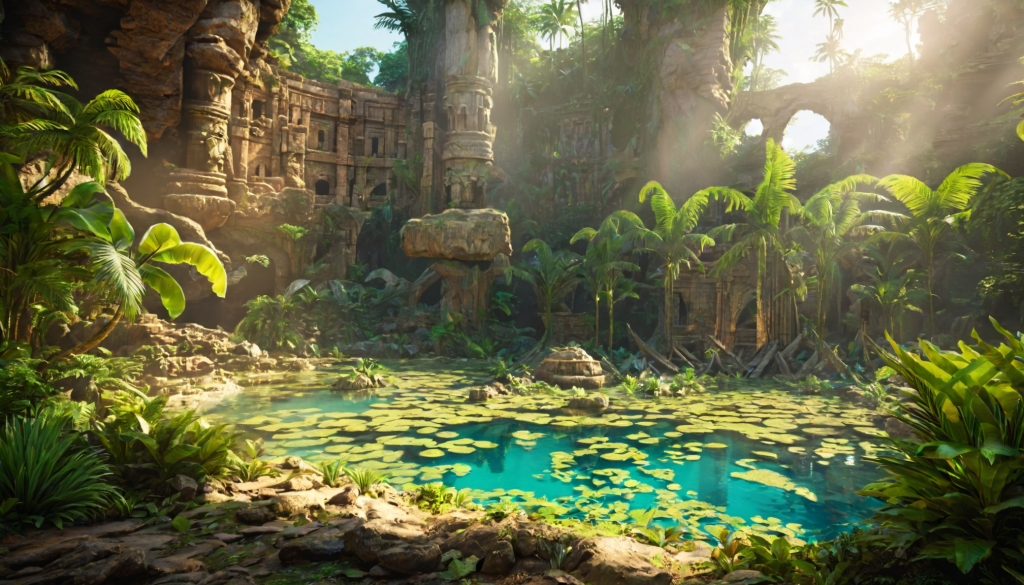


In effect, Unity scenes inform the photographic conversions, and the converted results then inform how Unity itself evolves. Texturing passes, lighting rigs, fog volumes, shoreline breakup, vegetation density, and even layout decisions are adjusted to chase the same visual truths revealed in the finalized images.
This turns the process into a feedback system rather than a one-way render pipeline: every background we finish sharpens the visual language of New Cyana Unity, ensuring that the playable version steadily converges toward the richness and credibility established by the remastered imagery instead of drifting away from it.


More Galleries
More Erotica
More Music
Future updates to this Magazine Include A Fully Self Contained PDF Version
as well as additional related content.
All Magazines will appear in Various versions of our Games in Full
A Print version is planned
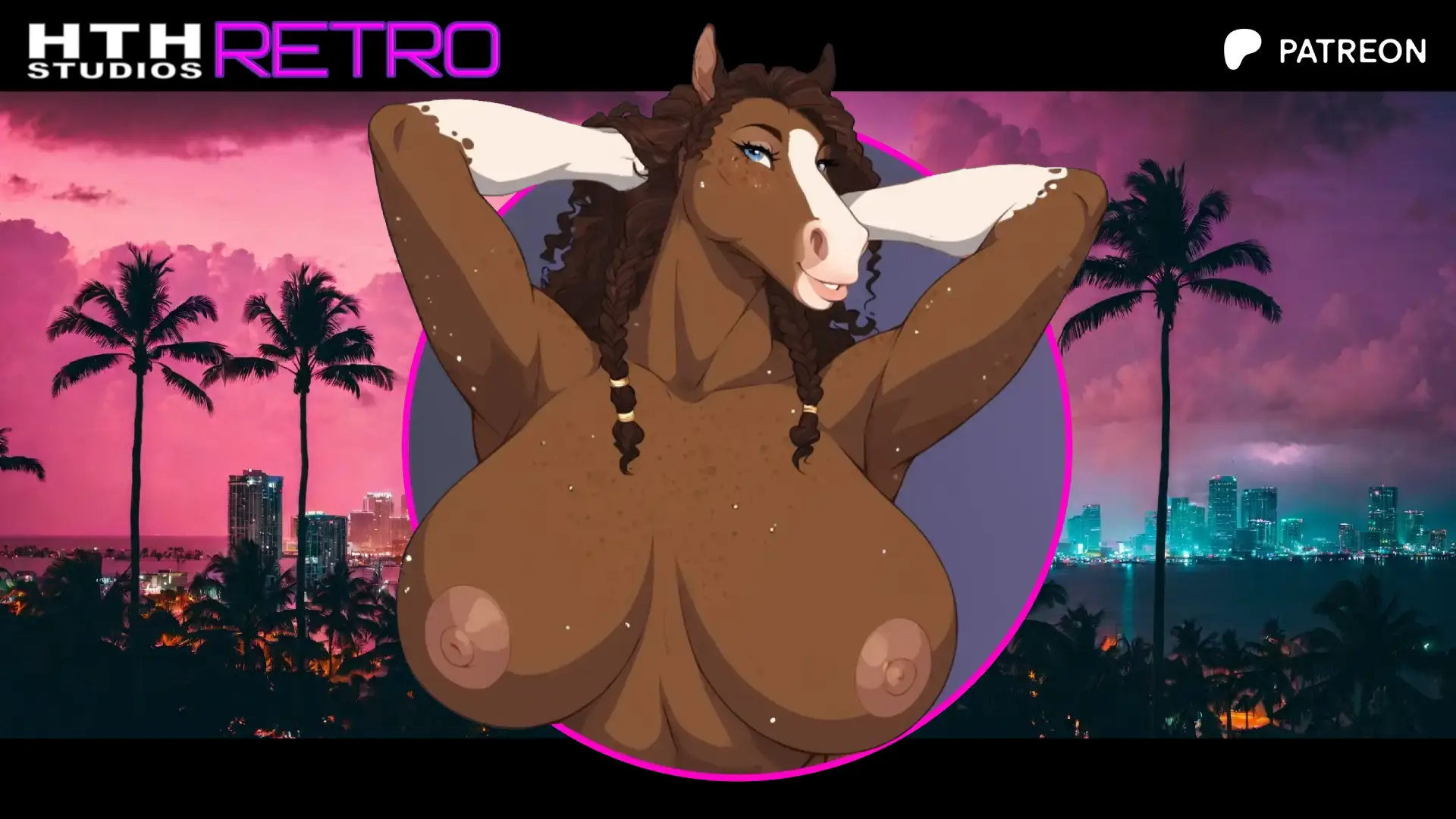
Mariah Masters was a defining presence in late-1980s and early-1990s adult film—a thick, striking chocolate mare whose lush curves, creamy stockings, and sultry stare dominated the screen. Born Mariah Kingston on the outskirts of Charleston, South Carolina, she brought a Southern charm and physicality that set her apart from the urban equine crowd. What marked her wasn’t just size—though her hips and bust became industry shorthand for “full-figured” overnight—but a certain slow-burning confidence, the way she would linger in a scene, drawing out every gaze and movement until the camera seemed to lose its patience before she ever did.
Mariah entered the business in 1985, straight off a string of backroom club nights and amateur circuits. Signed first by Pendragon Entertainment under her birth name, she quickly drew attention for her statuesque figure and the deliberate, slow-burn energy she brought to pin-up spreads. Within her first year, she adopted the “Masters” moniker and began specializing in interspecies features, quickly establishing herself as a favorite in the Southern “knot jockey” loop houses.
Career in Adult Films
Her ascent was rapid: by 1987, Mariah was headlining the notorious Southern Equine Knot Jockeys series, a recurring staple that cemented her status as the era’s go-to for heavy mares and interspecies pairings. From there, her filmography sprawled into every major equine-focused production of the decade—never as the background player, always as the centerpiece. Masters’ ability to sustain a scene, control tempo, and dominate partners without losing her easy, inviting persona became her signature. Her on-screen chemistry with both stallions and wolves is the stuff of industry legend, especially in crossover features where she routinely upstaged co-stars.

Notable Videos:
Notable Videos:
On screen, Mariah embodied the “urban powerhouse”—earthy, slow-moving, unapologetically sexual. Her performances emphasized drawn-out, high-stakes tease, heavy breastplay, and scenes that foregrounded her size and stamina. The hallmark was always anticipation: audiences learned to wait for her, to hang on her movements, knowing she would inevitably take over the scene. Off camera, she was known for a dry wit, soft drawl, and a well-guarded privacy, rarely granting interviews or participating in studio politics.
The mid-1990s saw Masters’ output slow as the industry shifted and newer faces came up through the ranks. By 1997, she exited the scene quietly, leaving behind a body of work that continued to define the “thick mare” archetype for years after. Despite rumors of comebacks or secret projects, Mariah left the industry on her own terms, refusing to participate in the nostalgia cycles that swept up many of her contemporaries.
Mariah Masters’ influence is unmistakable: nearly every major equine star of the late ‘90s and 2000s cited her as a model of slow-burn seduction and raw physical dominance. The “Masters method”—drawn-out, eye-contact-heavy, and relentless—became a template for up-and-coming performers. Retrospectives and fan archives frequently place her at the center of debates about the greatest interspecies scenes ever shot. Even now, decades after her retirement, her name still draws respect among performers and directors seeking to recapture the genre’s golden age.

MORE ON THE WAY
More from RETRO on the way
This list will be updated
![Risky Pleasure [OST]](https://hthstudios.com/website/wp-content/uploads/2026/01/Risky-Pleasure-OST.png)
Over the past few weeks you’ve probably noticed real, visible changes across the site and the wider HTH Studios ecosystem, and that’s not accidental.
New structures are going up, old ones are being reinforced, and some long-gestating ideas are finally being treated as first-class projects instead of ghosts from ten years ago.
Some have complained that it’s unprofessional to expand into new work while High Tail Hall isn’t “finished.” That criticism collapses the moment you stop pretending “finished” is a meaningful word in game development. People played it ten years ago. They’re still playing it now. They’re still talking about it, and they’re still waiting for its return. By any honest standard, something was completed—and its continued life proves it.
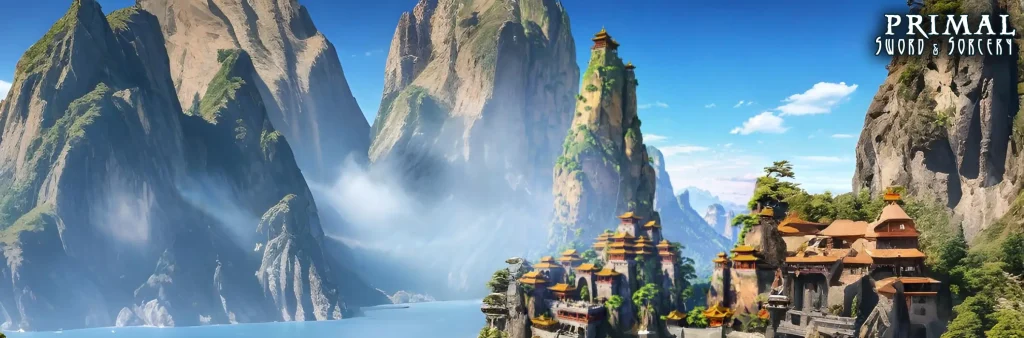
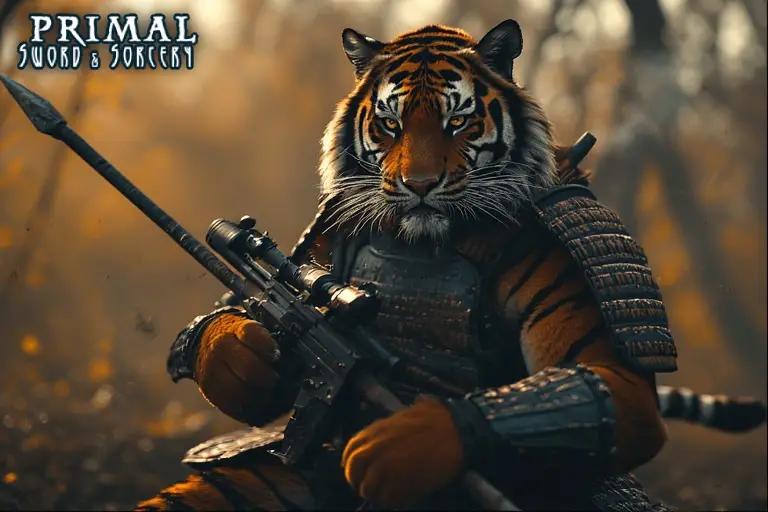
So why the focus on Primal Sword & Sorcery? Because it isn’t a side imprint or a vanity project. It’s a deliberate response to a cultural vacuum. Myth has been hollowed out across mainstream media. Star Wars, Star Trek, the MCU—whether you once loved them or not—isn’t coming back to a mythic state. There’s no triage plan that restores that spark.
Those systems are done, and what’s left is maintenance and messaging.
That vacuum is where the interesting work happens. For thirty years, there has been money, fandom, and demand for real, “Anthro”, sword and sorcery—violent, erotic, mythic, heavy-metal, bloody, filmed like film, not sanitized, not ironic, not embarrassed of itself. And somehow, despite all that time and all that capital, it never happened.
Not once.
Today, with modern tools, that excuse is gone. We can do things that would have required massive budgets, brutal compromises, or outright impossibilities decades ago—and we can do them without killing stuntmen in the process.
Primal Sword & Sorcery exists because nothing is stopping us anymore.
This also isn’t about hoarding IP or building a walled garden. I’m setting aside infrastructure and legal space so this work isn’t just mine. I’m a capitalist; I believe in people making money. I like the idea of my audience having real, disposable income, building their own myths, and profiting from them.

Not fanfiction. Not unpaid labor. Real work, sold legally, in the open.
If that sounds unconventional, good—it’s supposed to be.
I’ve been building worlds my entire life. I don’t struggle to invent civilizations, timelines, or mythic systems; I do it reflexively. The Vandyrian Empire is one of those systems—and it isn’t even the biggest or the most interesting. Infinite Sky, Structure One, and what comes after will be treated the same way: codified, documented, and made usable by others. These codices aren’t collectibles. They’re tools.
And no, this isn’t about chasing billionaire fantasies. Yacht money is a joke. Owning a yacht means owning a crew and a logistical nightmare. If you want the experience, you rent the damn thing and walk away. What actually matters is good entertainment that isn’t filtered through corporate cowardice or ideological scolding.
We’ve seen what happens when myth is locked behind corporate gates. We’ve watched Star Wars, Trek, Conan, D&D—all of them—become vehicles for control, dilution, and lectures instead of inspiration. I’m not interested in repeating that experiment.
If that means handing the fire to others and letting them build, burn, and profit with it, so be it. The tools exist.
The space exists.
The culture is starving for it. Have at it.
The Greater Vandyrian Empire is Yours.
and hell, did I not promise you that “Free content would be coming back in a big, big way.”?
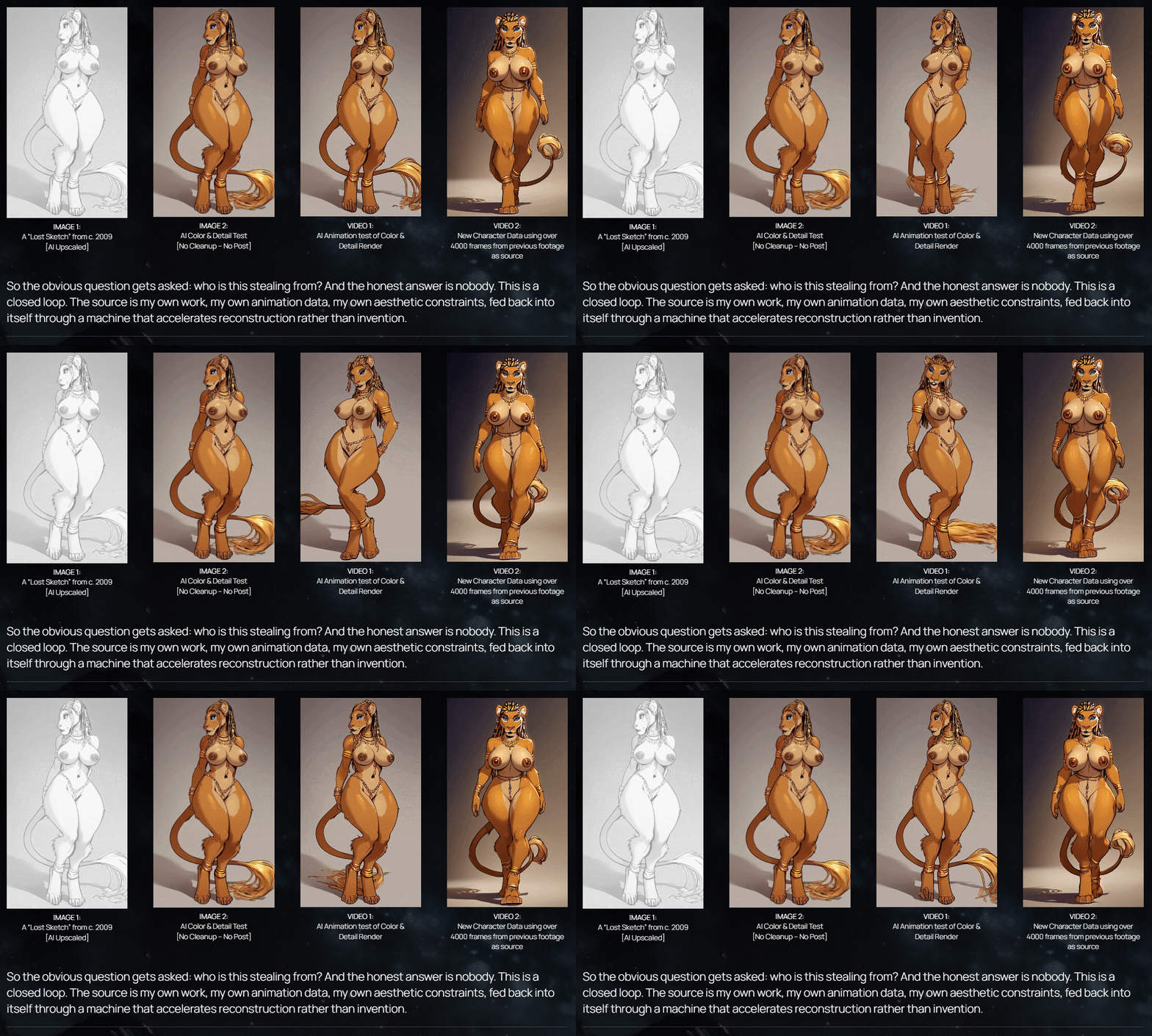
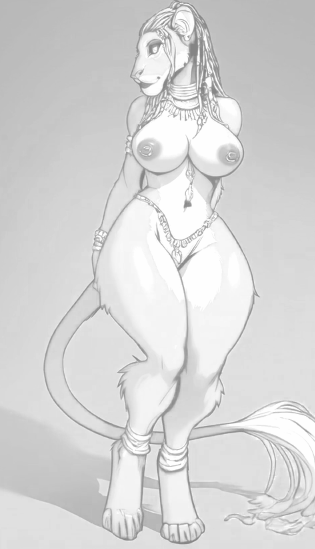
Image 1 is a character that only survives as a low-resolution digital scan. The original drawing is gone. I don’t know where it went, and I probably threw it out around the time it was scanned, when it was already a decade old. That wasn’t unusual. I lost a lot of sketches over the years. Paper degrades, folders disappear, life moves on. What matters is that the scan is now the only remaining anchor tying that character to reality. Without it, the character would simply not exist anymore.
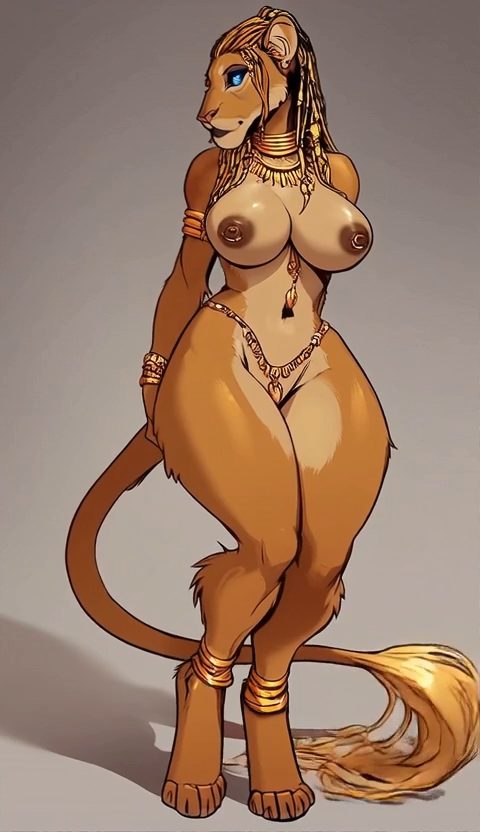
Image 2 jumps forward to the present and flips the usual AI narrative on its head. This wasn’t about “letting the machine finish the art.” It was a stress test: how low-res could I go and still recover something recognizably mine? The answer was uncomfortably low. Flat base color, Flash-era shading logic, and eyes that sit in that slightly uncanny middle space my work has always had—probably a side effect of years inside Flash rather than any intentional stylistic choice. “Liminal” isn’t quite the right word, but close enough to get the point across. The takeaway here is that style isn’t stored in pixel density; it’s encoded in decisions, habits, and visual shortcuts learned over decades.
Video 1 pushes that idea into motion. This is the first test of taking an augmented sketch and making it move, using unreleased animation tests from years ago, in-game motion data, and custom renders done at 48 and 60 fps specifically because 24 fps just doesn’t hold up anymore. There’s nothing sacred about 24 fps—it was a technical compromise that got mythologized. Once you remove that assumption, everything looks cleaner, more responsive, and more in line with how people actually perceive motion today. This isn’t AI replacing animation skill; it’s animation knowledge being reused aggressively.
Video 2 is where people usually start getting loud. A fully AI-constructed walking model, derived entirely from the same sketch-to-AI-to-video pipeline you just watched. No external characters, no stylistic borrowing, no secret sauce lifted from someone else’s IP.
So the obvious question gets asked: who is this stealing from? And the honest answer is nobody. This is a closed loop. The source is my own work, my own animation data, my own aesthetic constraints, fed back into itself through a machine that accelerates reconstruction rather than invention.
That’s the part that gets missed when people throw around words like “slop.” What’s actually happening here is time compression. This is about clawing back years that were burned dealing with unreliable collaborators, endless cleanup passes, and human bottlenecks that had nothing to do with creativity and everything to do with logistics, ego, or self-destruction. For someone who’s spent decades learning animation the hard way, being told this is lazy or unethical doesn’t land as critique—it lands as ignorance. The machine isn’t replacing craft here. It’s finally respecting it.
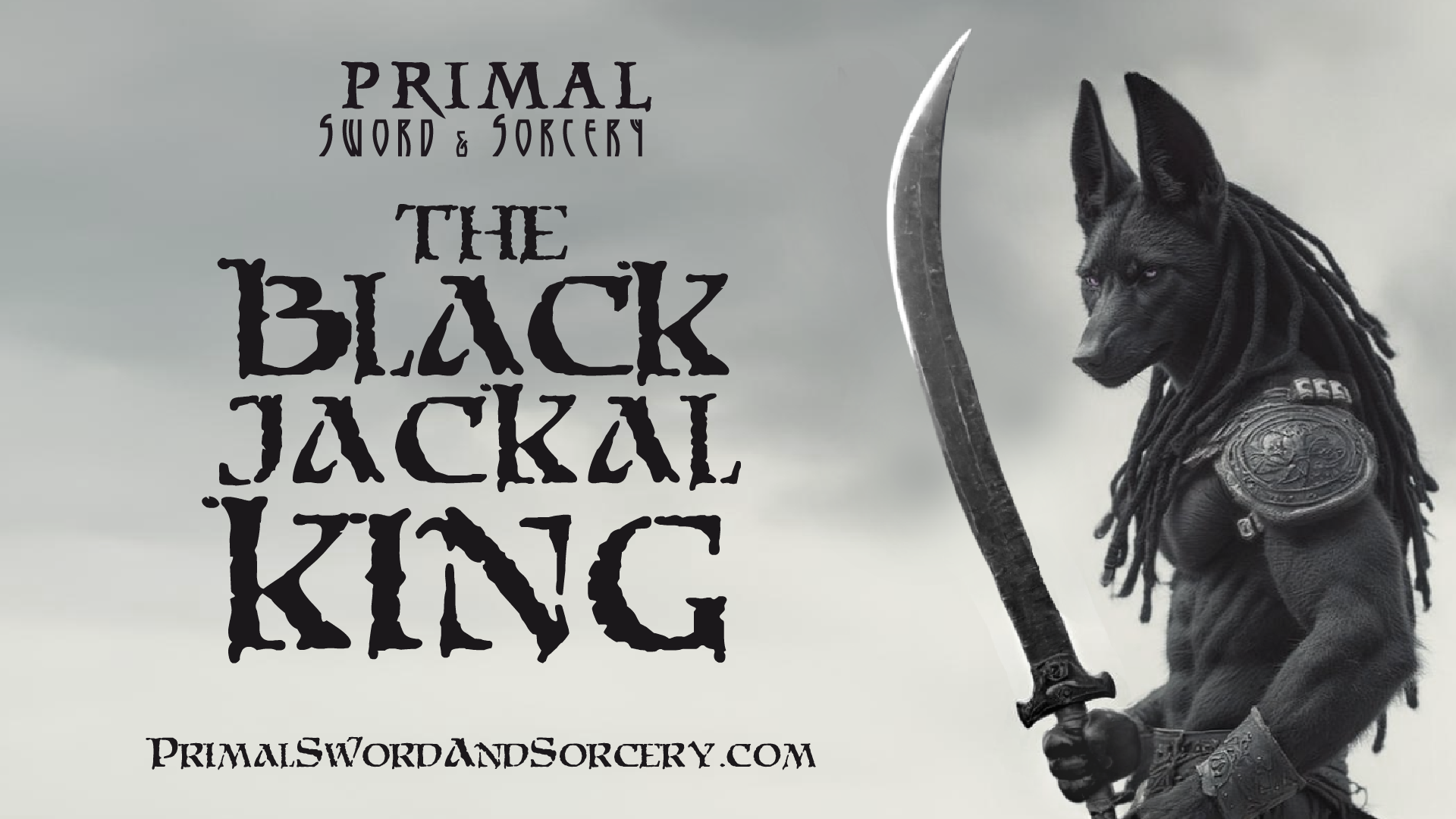
“I make no bones about the content, it is exactly what it is meant to be, but I did make an error in its release, in that the damn Pilot MUST Always be FREE, that is entirely my bad and it is bad for exposure frankly as it buckles momentum.
Fortunately I am well into the next two entries of his dark cycle and should have more soon, once those release I will unleash him upon the masses.”